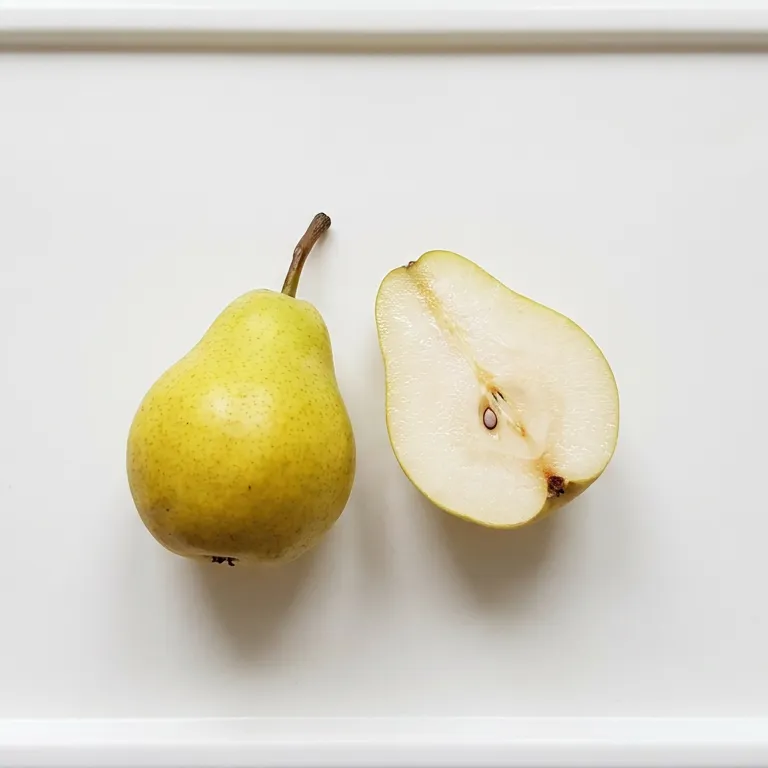
Pear

Also called pears, nashpati, naspati, babugosha

Safe from6 months
Choking riskLowCook soft or fully ripe
AllergenNot common
Iron-richNo
Rich inGut-friendly

How to serve, by her age

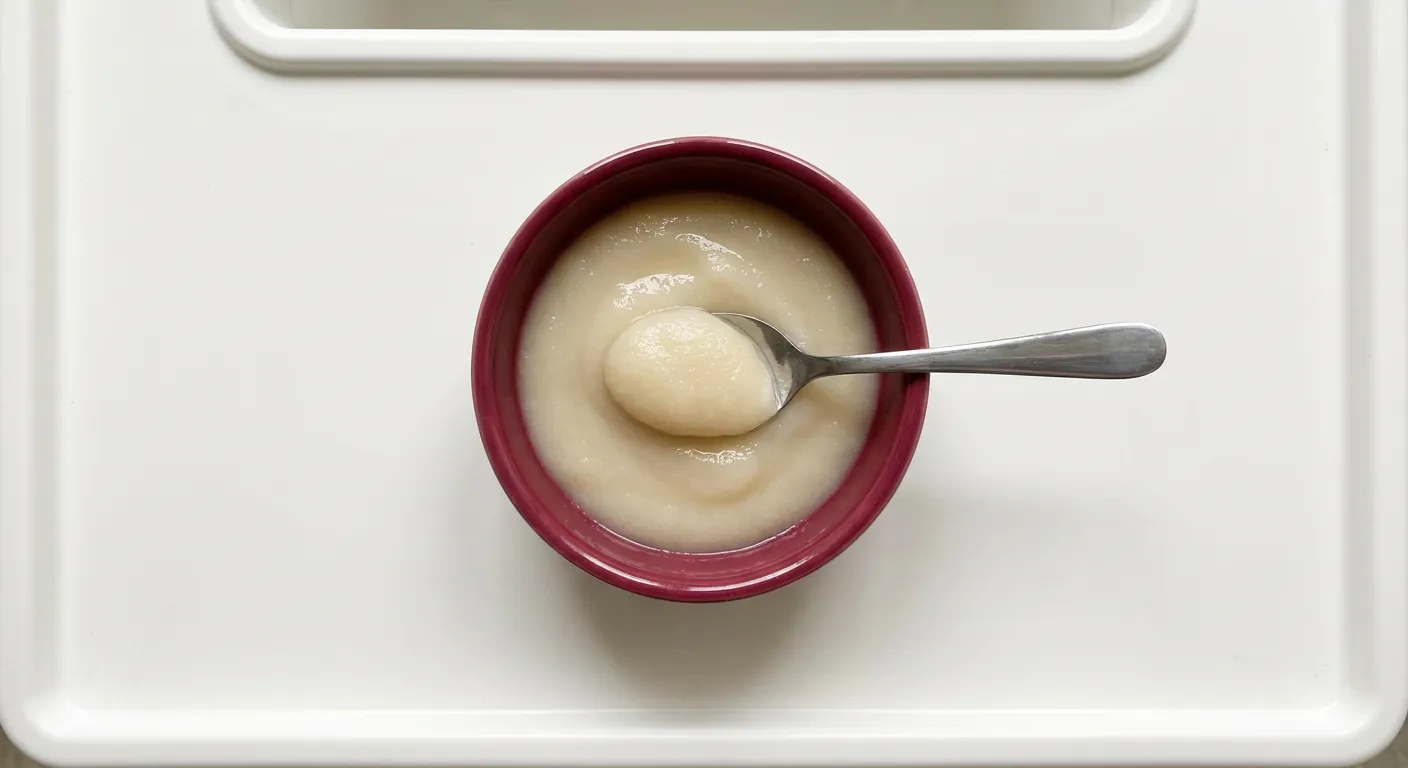
Pear at 6+ months: Soft cooked pear mash
Soft cooked pear mash

A soft cooked pear is the easiest way in. Peel a ripe one, take out the core and any hard bits, then steam, boil or pressure-cook the pieces until they give way under a fork, and mash them to a smooth purée. If the pear is very ripe and soft, you can skip the cooking and just grate or mash it raw.

Pear holds a lot of water, so keep the mash thick enough to sit on the spoon instead of running off it. The fruit brings its own sweetness, so keep her bowl plain, with no added salt before one and no added sugar before she is two. Once she is happy taking it plain, you can stir a little through a cereal or curd she knows, beginning with a spoon or two and letting her appetite guide you.
Pear at 9-12 months: Soft bite-sized pieces
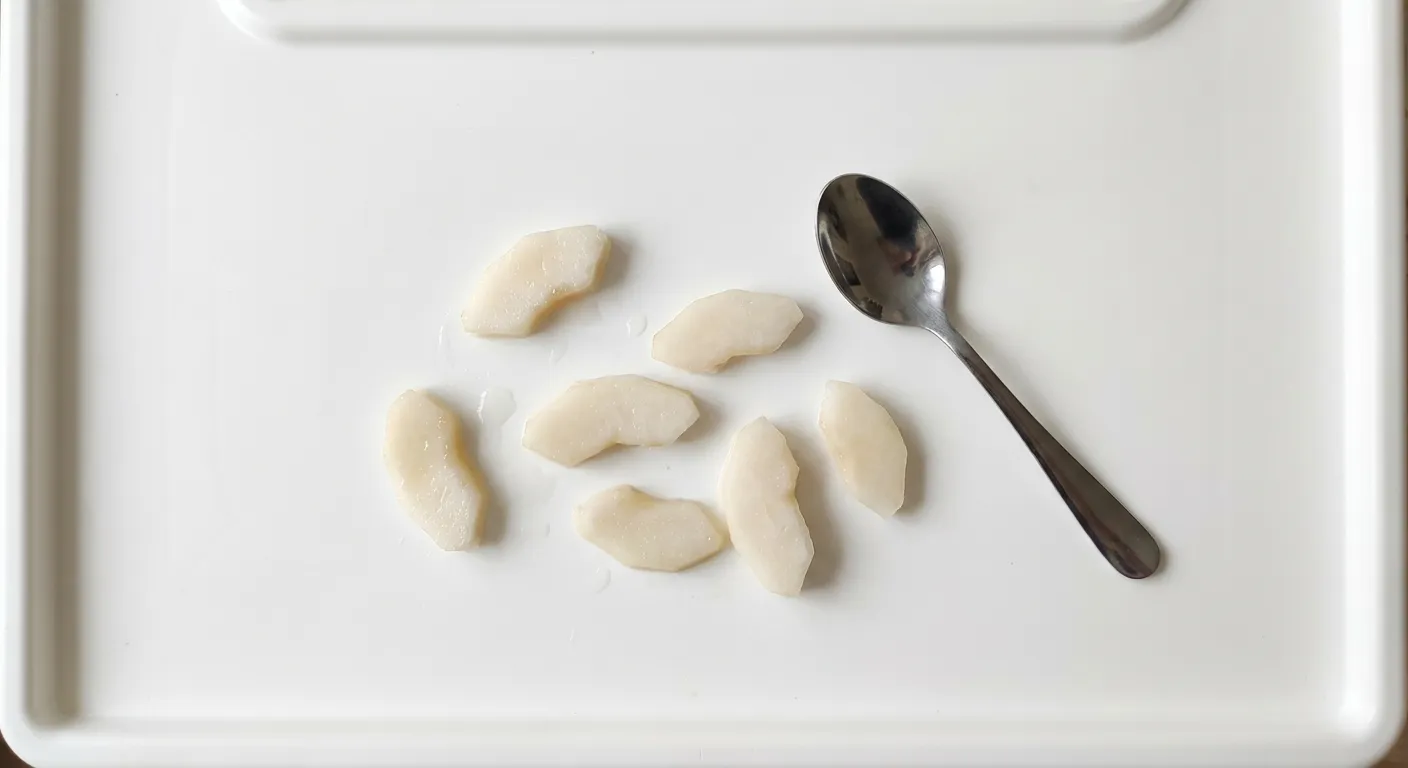
Soft bite-sized pieces

By around nine months she is reaching out to feed herself, so hand her soft ripe pear with the skin off, cut into small, flat, bite-sized pieces she can grip. Managing each piece is good practice for the pincer grasp she needs to feed herself.

A very ripe pear is soft enough to give raw like this. A firmer one is better cooked soft first. Keep the pieces small and flat rather than round cubes she could gulp, and stay with her while she eats.

Spoon, fingers, or both? ›
Pear at 12+ months: Family pieces or wedges
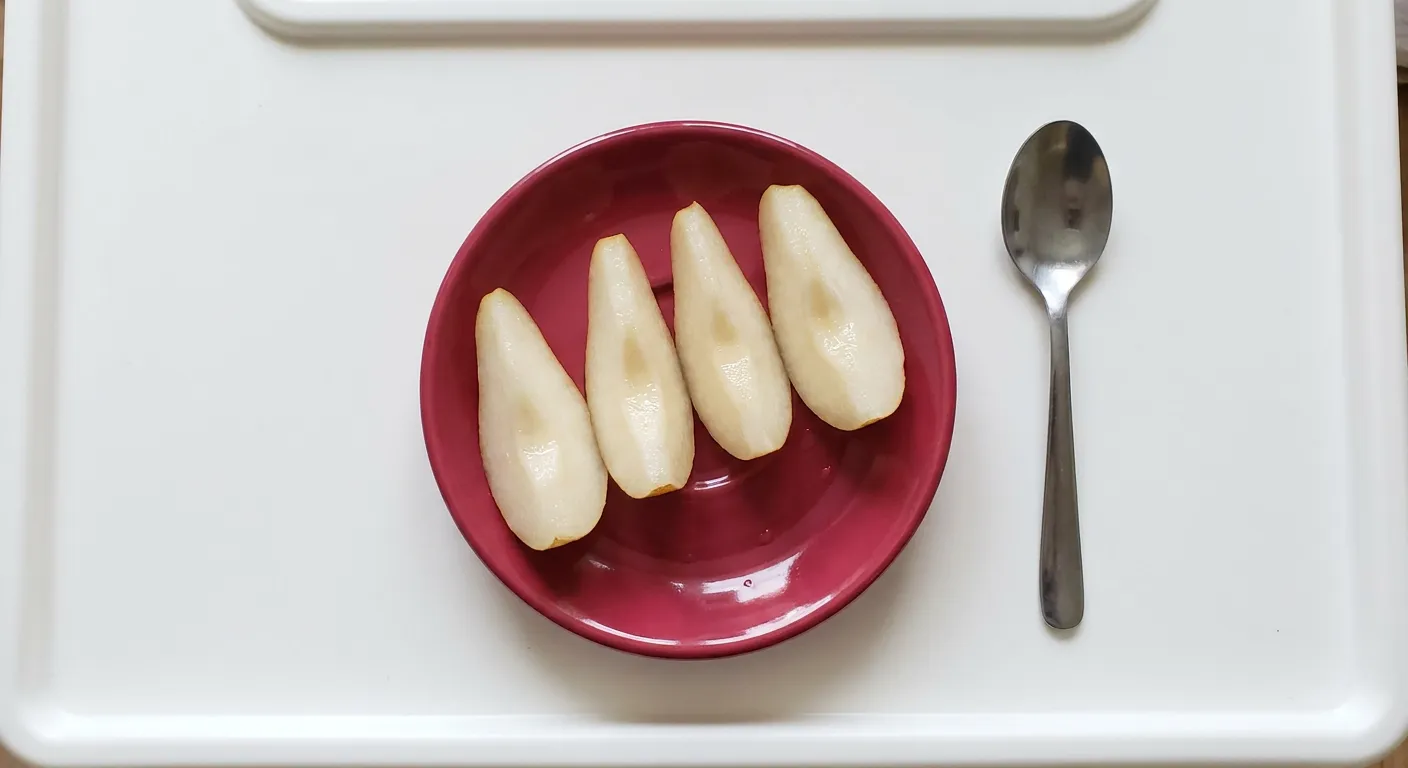
Family pieces or wedges

Once she turns one, pear can join the family's own meals. Offer it in bite-sized pieces or soft wedges with the core and seeds taken out, and leave the skin on or off depending on how well she chews.

A whole pear for her to hold and bite from comes a little later, once she chews well and sits calmly to eat. Stay near while she works through the firmer pieces.

Spoon, fingers, or both? ›

About pear

A soft cooked pear, or a very ripe one mashed smooth, makes an easy, naturally sweet first food from six months. It carries gentle fibre, which is one reason the ICMR-NIN counts pears among its everyday fruits. It is more of a steady daily fruit than a nutrient standout.

The doubts we clear

CHOKINGWill she choke on pear?
A firm or underripe pear is hard and slippery, so a piece can slip back whole and block her throat. Cook it until it mashes easily, or use a very ripe pear and press it gently between your fingers to check it is properly soft before serving it raw. At six months keep it mashed or in soft cooked pieces, and once she is picking food up herself from around nine months, offer small, flat, bite-sized pieces rather than hard chunks.Choking vs gagging ›
MYTHA pear stays safe in every season, through winter and through sniffly days alike. There is no need to take it away while she has a cold, and calling the fruit 'cooling' does not change that.
A cooked or ripe pear does nothing to a baby's body temperature, so it cannot bring on or worsen a cold, a cough or congestion. Elders at home may call it 'thanda' and say it is best kept away in winter or during a sniffle, but the paediatricians most of us see will say a pear is fine all year round. If it keeps the peace at home, offer it warm or at room temperature, never fridge-cold, and a little earlier in the day. Either way the fruit is safe.

Questions moms ask

I steamed the nashpati and it is still hard and lumpy, and I am scared she will choke.
A firm nashpati that will not soften is a real worry. Cook it a little longer until a piece mashes easily between two fingers, or switch to a very ripe, softer pear that needs barely any cooking. A loud gag as she learns is not the same as quiet choking.Choking vs gagging ›
She has been constipated since we started solids, and everyone says give pear, but how much?
Constipation when solids begin is one of the most common worries, and it is usually just her tummy adjusting. You can keep offering pear at meals as you would any food. A little extra water between feeds often makes it easier for her. If it stays hard and painful, check with your paediatrician.Potty changes and constipation ›
Should I try baby-led weaning with pear?
Pear works for both spoon-feeding and self-feeding, so you do not have to choose one path. Begin with a smooth mash at six months. Around nine months, the IAP places the move from mash to pieces she picks up. Hand her soft ripe pieces to gum on her own.Spoon, fingers, or both? ›
How much pear, and how often?
Daily pear is perfectly fine, as it belongs in her everyday fruit. Start with a couple of spoonfuls and slowly work up to a few, roughly a small handful in her bowl. Because pear is one of the more filling, higher-energy fruits, ICMR-NIN says to serve it in moderate amounts, so rotate it with other fruits and vegetables across the week rather than giving pear at every meal.How much she should eat ›
Can too much pear give my baby gas or loose motions?
It can, if a lot goes in at once. A few spoonfuls at a meal is plenty for most babies, so there is no need to load up her bowl. If anything about her tummy ever worries you, just check with your paediatrician.Potty changes and constipation ›
Is it safe to mix pear with apple or cereal for my baby?
Yes, once she has already had pear and apple each on their own, mixing them is completely fine, and the same goes for stirring pear into her cereal. The one habit worth keeping early on is to introduce a new food by itself for a few days first, so if something ever disagrees with her you can spot which food it was. After that, a pear-and-apple mash or a spoon of pear through her cereal is an easy meal.
Nashpati or babugosha, does it matter which pear I pick for my baby?
Both nashpati and babugosha work well, so pick whichever you find fresh and soft. Many of us find babugosha the softer, easier one to mash, while a firmer nashpati just needs a bit more cooking to soften. It comes down to what is ripe in the market that week, and not a safety difference between the two.

Still have a question?

I read every message myself and reply.

WhatsApp me

Know a mom who needs this?

Send it on WhatsApp

Every page is checked against ICMR-NIN, IAP and WHO guidance.

Sources: IAP, ICMR-NIN and 3 more sources ›

Educational only, and never a replacement for your paediatrician. Read the full note ›