Wheat

Also called gehu, gehun, atta, wheat flour

Safe from6 months
Choking riskLowCook soft, no dry pieces
Iron-richNo

How to serve, by her age

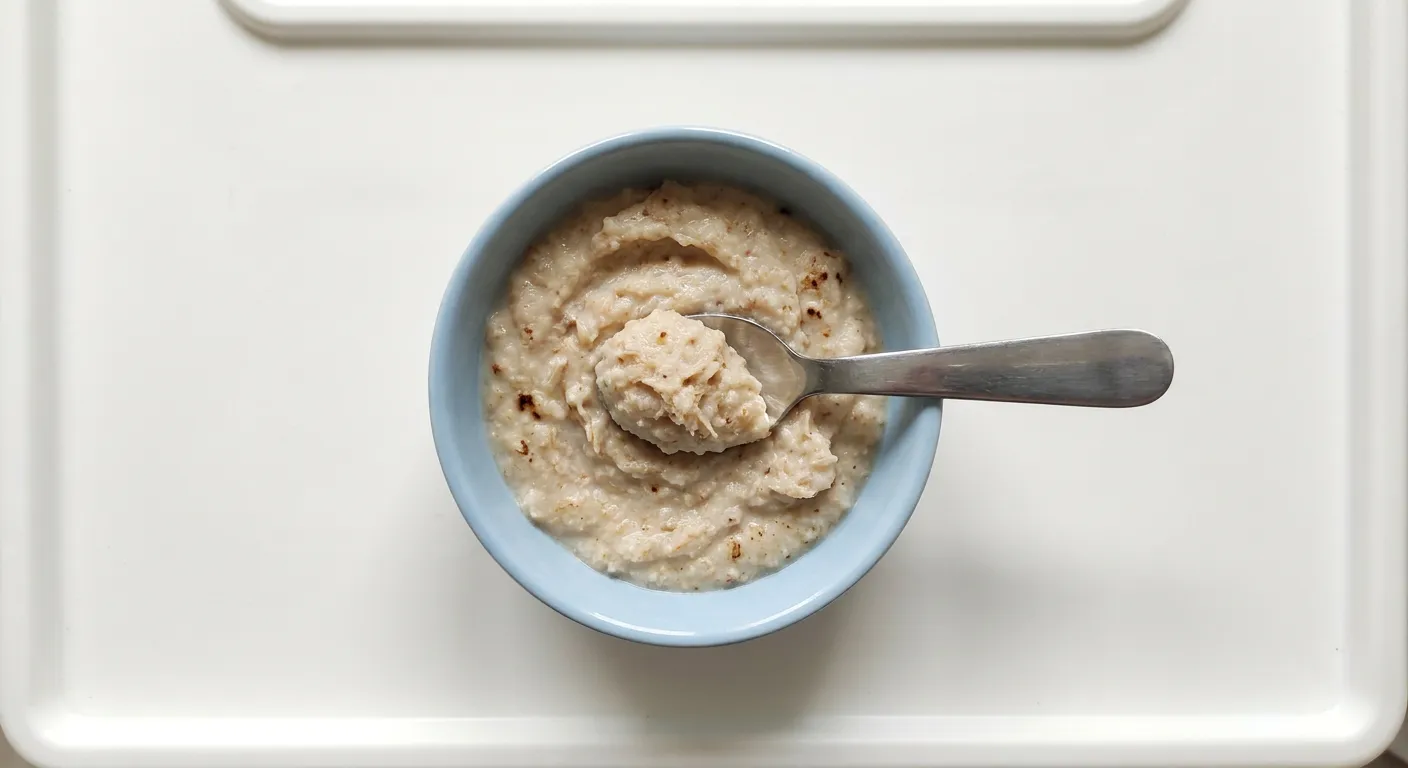
Wheat at 6+ months: Soft mashed roti
Soft mashed roti
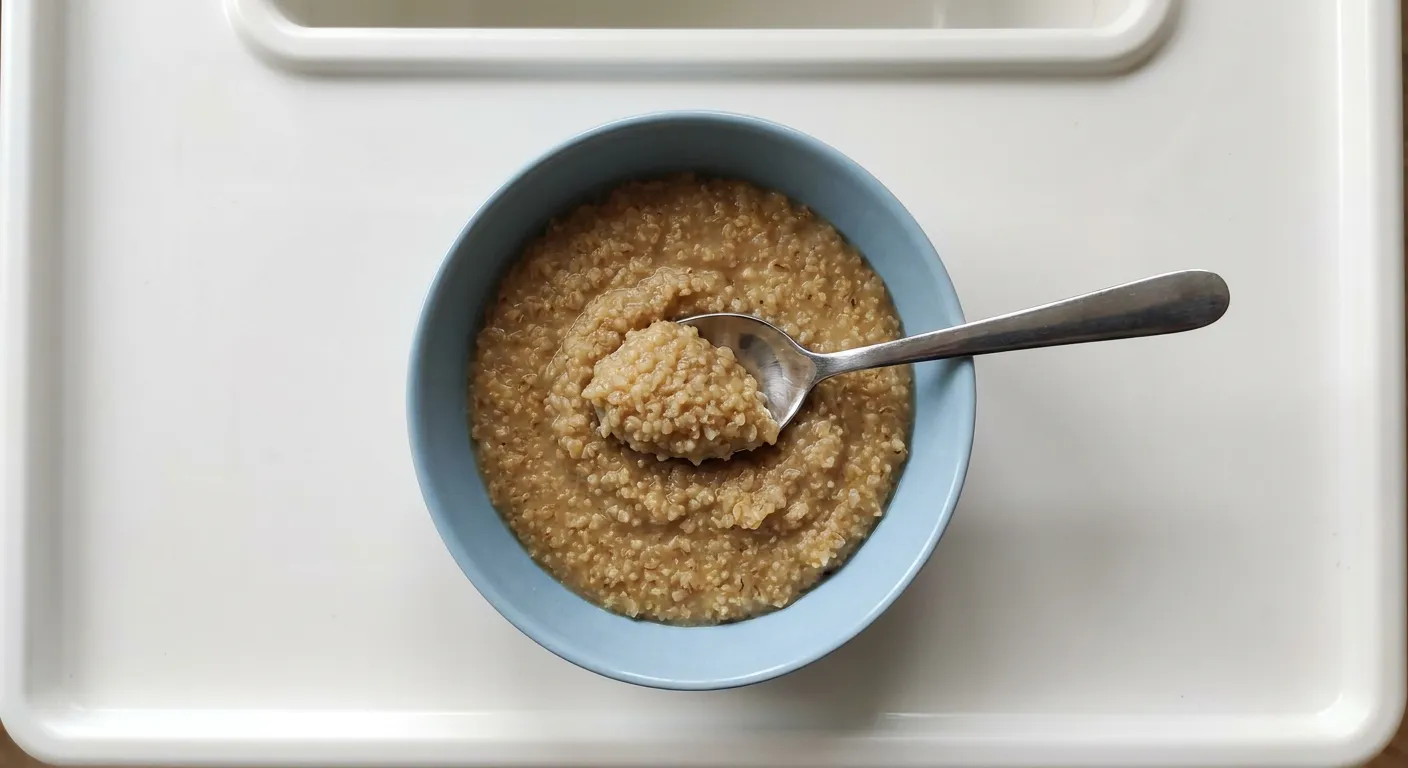
Wheat at 6+ months: Dalia porridge
Dalia porridge

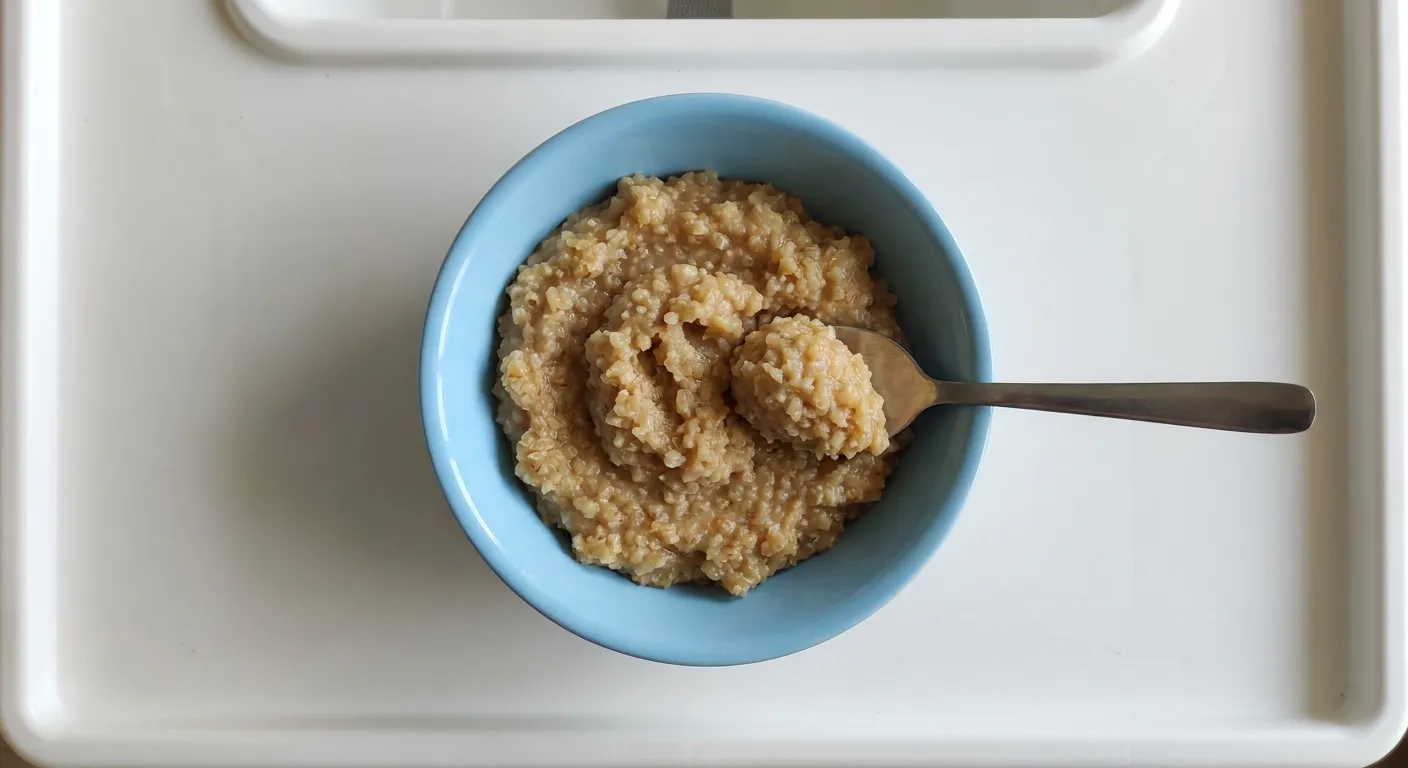
We can start her on soft mashed roti or a smooth dalia porridge. For roti, tear it into small pieces and soak them in a little milk or vegetable curry until they go soft, then mash so there is nothing firm for her to catch on. Dalia just needs cooking right down into a thick, smooth porridge.

Keep the dalia thick, not a thin watery gruel, since the watery liquid on its own does not carry the energy she needs. A good sign is that it holds on the spoon when you tilt it. Once she is happy with wheat on its own, you can also cook a little of it into a soft dal and vegetable khichdi she already takes.

Wheat is a common allergen, so the first time, serve it by itself and see how she does over a couple of days. Keep it plain, with no added salt while she is little and no added sugar before she is two. Begin with just a spoon or two, then follow how much she wants.
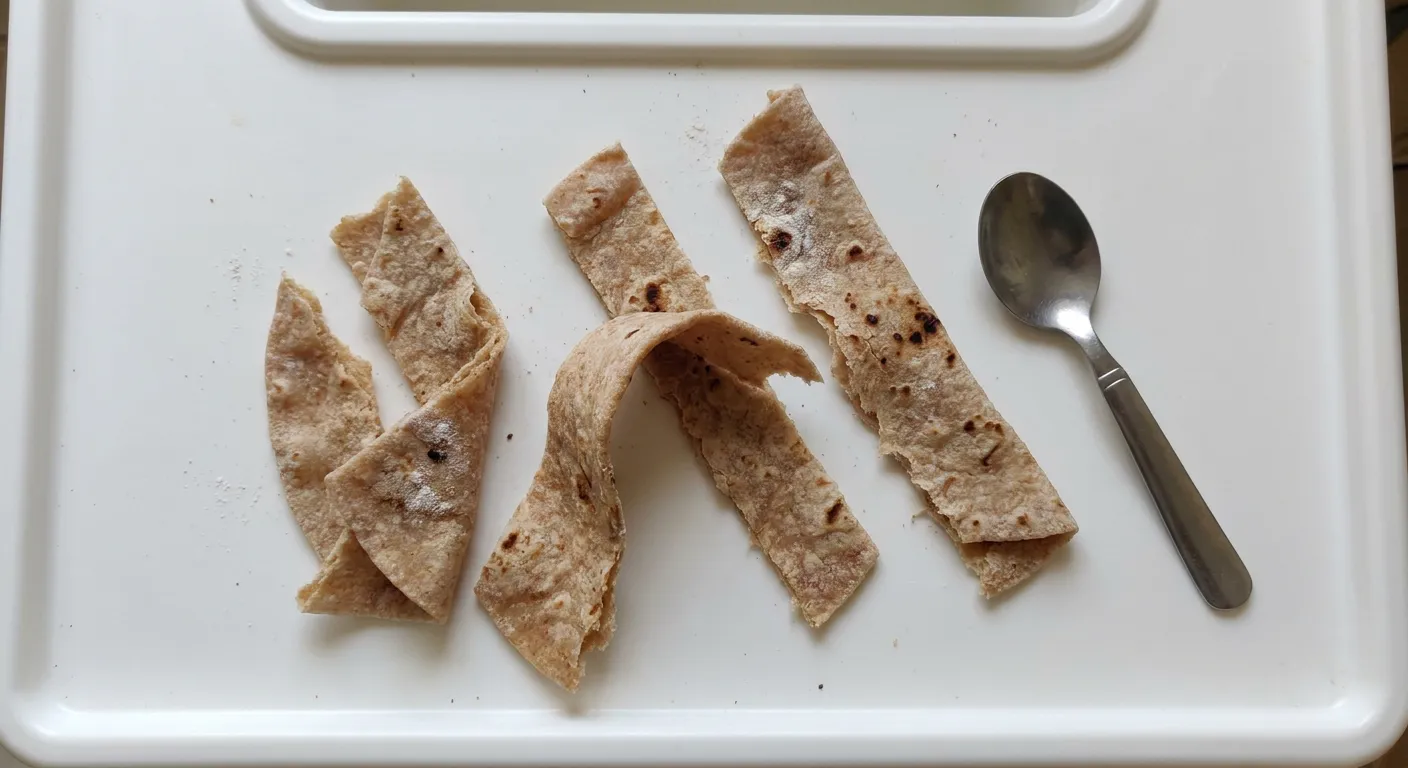
Wheat at 9-12 months: Soft roti strips
Soft roti strips
Wheat at 9-12 months: Thicker dalia
Thicker dalia

By now she can lift food to her own mouth, so offer soft strips of roti she can hold. A thicker dalia that holds together works well too, and the soaked-soft bits she started on are still fine on softer days. Picking up those soft strips herself, using her whole hand, is how she practises feeding herself.

Keep the pieces soft enough to squash between your fingers, and keep giving wheat as part of a dish with dal and a vegetable. There is still no need for any added salt or sugar at this age.

Spoon, fingers, or both? ›
Wheat at 12+ months: Family roti, kept soft
Family roti, kept soft

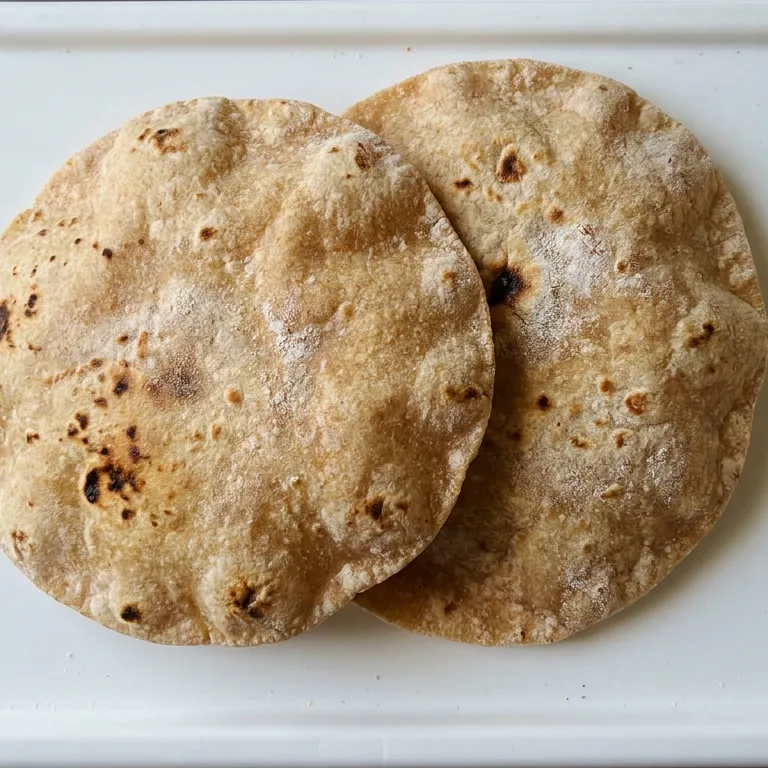
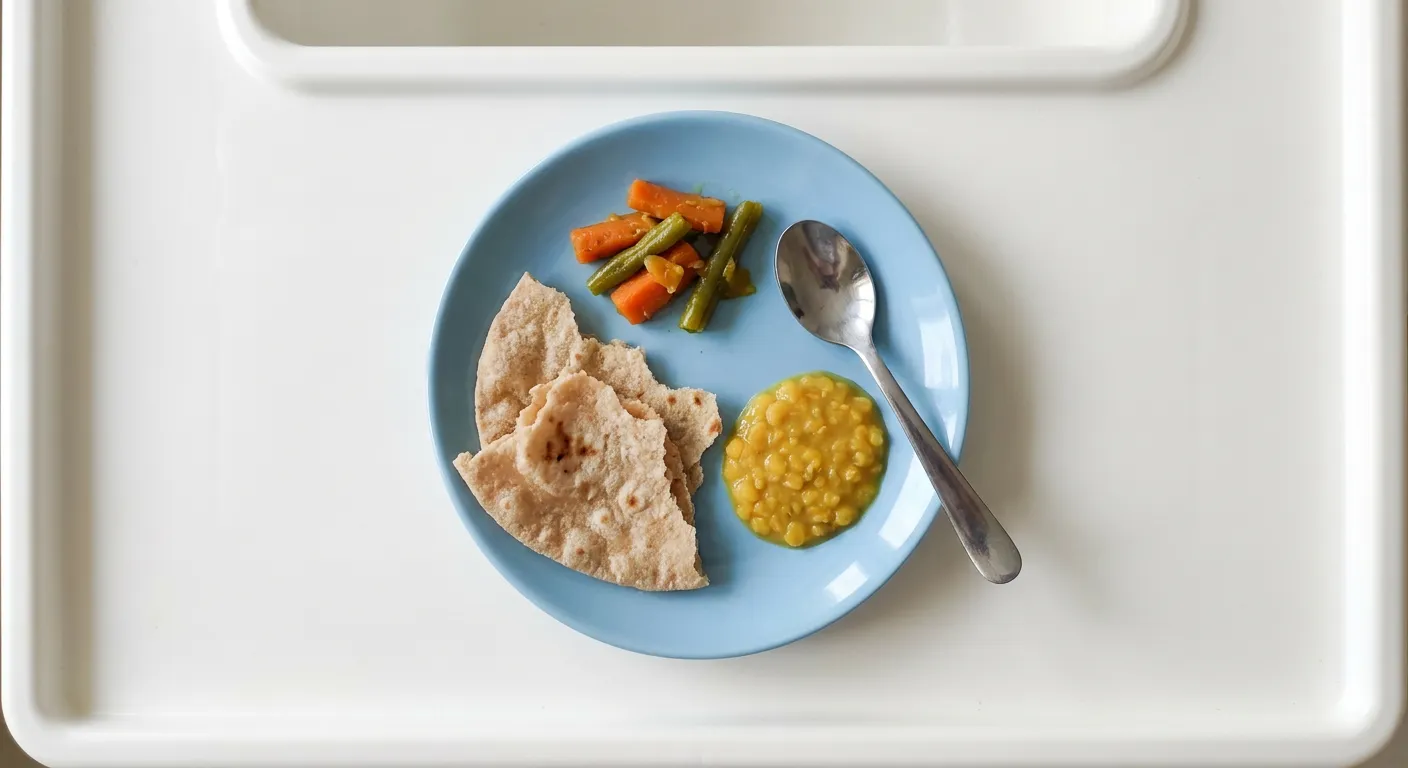
From a year, wheat is just part of the family plate. She can have soft roti, chapati or paratha, torn small if she still needs it, and dalia kept soft, alongside the dal and vegetables everyone eats.

Cook her share soft and go easy on the salt, and skip added sugar till she turns two. She sets her own amount at this age, taking wheat alongside everything else in her meal.

Spoon, fingers, or both? ›

About wheat

Whole wheat is the everyday staple that carries dal, vegetables and ghee into a baby's meal, cooked soft as roti or dalia from six months. The IAP names wheat a normal family staple, and you do not need to hold off this gluten grain past six months. It is a gentle base food that works best next to dal and vegetables, not on its own.

The doubts we clear

CHOKINGWill she choke on wheat?
Dry or hard wheat is the risk: an unsoftened roti or chapati, or loose cooked dalia grains, can scatter in her mouth or stick and make her gag. Soak roti pieces in milk or a little vegetable curry until soft and mash them, and cook dalia soft, never dry flour or hard whole grains. Once she is on finger food after nine months, cut roti into long narrow strips rather than round pieces.Choking vs gagging ›
ALLERGENWhat does a reaction look like?
Wheat is one of the common allergen foods, but most babies take it with no trouble. Offer it on its own the first time, in a small amount, and watch over the next few days before adding another new food. Introducing it alone this way means that if a rash or a tummy upset does show, you know what set it off.Starting egg, nuts and other allergens ›
MYTHSoft, mashed wheat is fine for a baby from six months. You do not need to call roti 'heavy' and hold off, giving only rice.
Roti and dalia are everyday staple foods, and Indian paediatric guidance names the idea that wheat is too 'heavy' for a baby and marks it false. Softened and mashed, wheat sits fine in a small tummy, and there is no reason to wait past six months or stay with only rice. When the family still worries, a soft dalia porridge or a well-softened piece of roti makes a gentle first form, rather than putting wheat off altogether.

Questions moms ask

I gave my 8-month-old tiny soaked roti pieces and he still gagged. Now I'm scared of wheat.
That gag is frightening to watch, and it is common while a baby learns a new texture. Try the roti softer and wetter for a week or two, soft enough that nothing firm is left to catch in his throat. A gag is his reflex working, different from choking.Choking vs gagging ›
We started thin wheat dalia this week and now she seems constipated. Should I stop it completely?
You do not need to stop the dalia. A few firmer days are common as her body settles into a new grain. Offer a little extra water and some soft pear or prune, which usually gets things moving again. If it carries on for days, or she is clearly uncomfortable, let your paediatrician take a look.
I fed my 6-month-old atta porridge and today there's redness around her mouth. Is this a wheat allergy?
A rash just around the mouth is very often from food touching her skin, not an allergy. A true reaction shows more, like hives or vomiting, so if you see those or the rash spreads, call your paediatrician. But swollen lips or face, or any trouble breathing, needs emergency help now.Starting egg, nuts and other allergens ›
Everyone says loading her dalia with ghee and dry-fruit powder will make her chubby. Do I need to?
No, you do not need to load her dalia to help her gain. Wheat is a base food, and weight builds from her whole plate across the day, not from one rich bowl. A small spoon of ghee adds useful energy, and dal and a vegetable alongside make it a balanced meal. Keep it simple and let her appetite lead.Her weight and growth ›
Should I try baby-led weaning with roti?
A mix of both suits wheat well. At six months she takes a smooth mash of roti or dalia off the spoon. Around nine months, offer soft strips of roti for her to lift on her own, holding them in her whole hand. That is about when the IAP has babies stepping from mashes up to finger food.Spoon, fingers, or both? ›
How much wheat, and how often?
Most days, yes, though wheat is there to share the plate, not to fill it alone. A little roti or dalia earns its place once dal and a sabzi sit beside it, so the meal carries more than plain starch. Her share grows from a small spoonful to a katori over the months, and her own appetite tells you when she has had enough that meal. The ICMR-NIN points parents towards several different food groups across a day, and wheat simply fills one of those slots.How much she should eat ›

Still have a question?

I read every message myself and reply.

WhatsApp me

Know a mom who needs this?

Send it on WhatsApp

Every page is checked against ICMR-NIN, IAP and WHO guidance.

Sources: IAP, ICMR-NIN and 3 more sources ›

Educational only, and never a replacement for your paediatrician. Read the full note ›

What does a reaction look like?

Wheat is one of the common allergen foods, but most babies take it with no trouble. Offer it on its own the first time, in a small amount, and watch over the next few days before adding another new food. Introducing it alone this way means that if a rash or a tummy upset does show, you know what set it off.Starting egg, nuts and other allergens ›