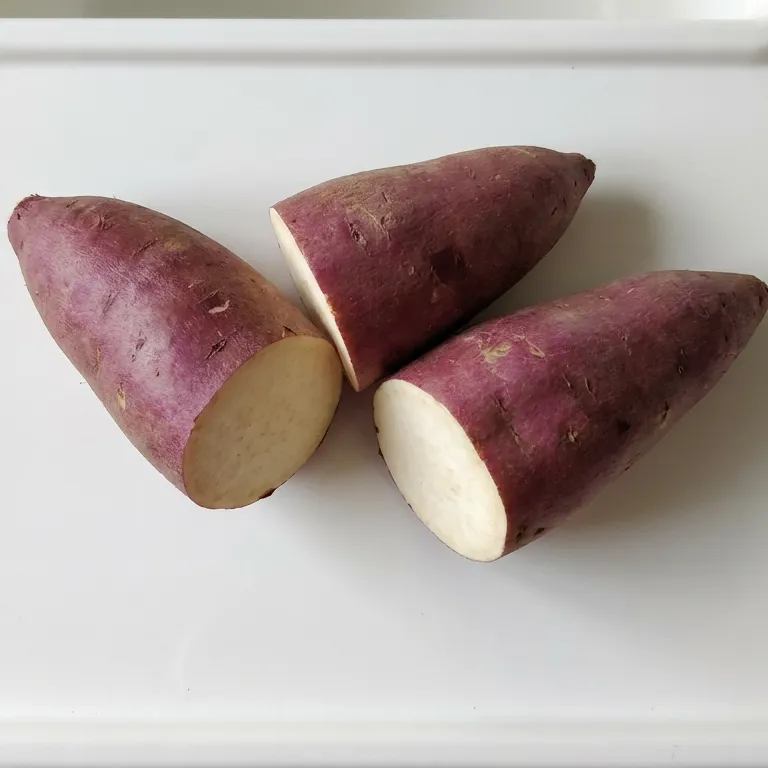
Also called sweet potatoes, shakarkand, shakarkandi, sakkarai valli kizhangu
How to serve, by her age
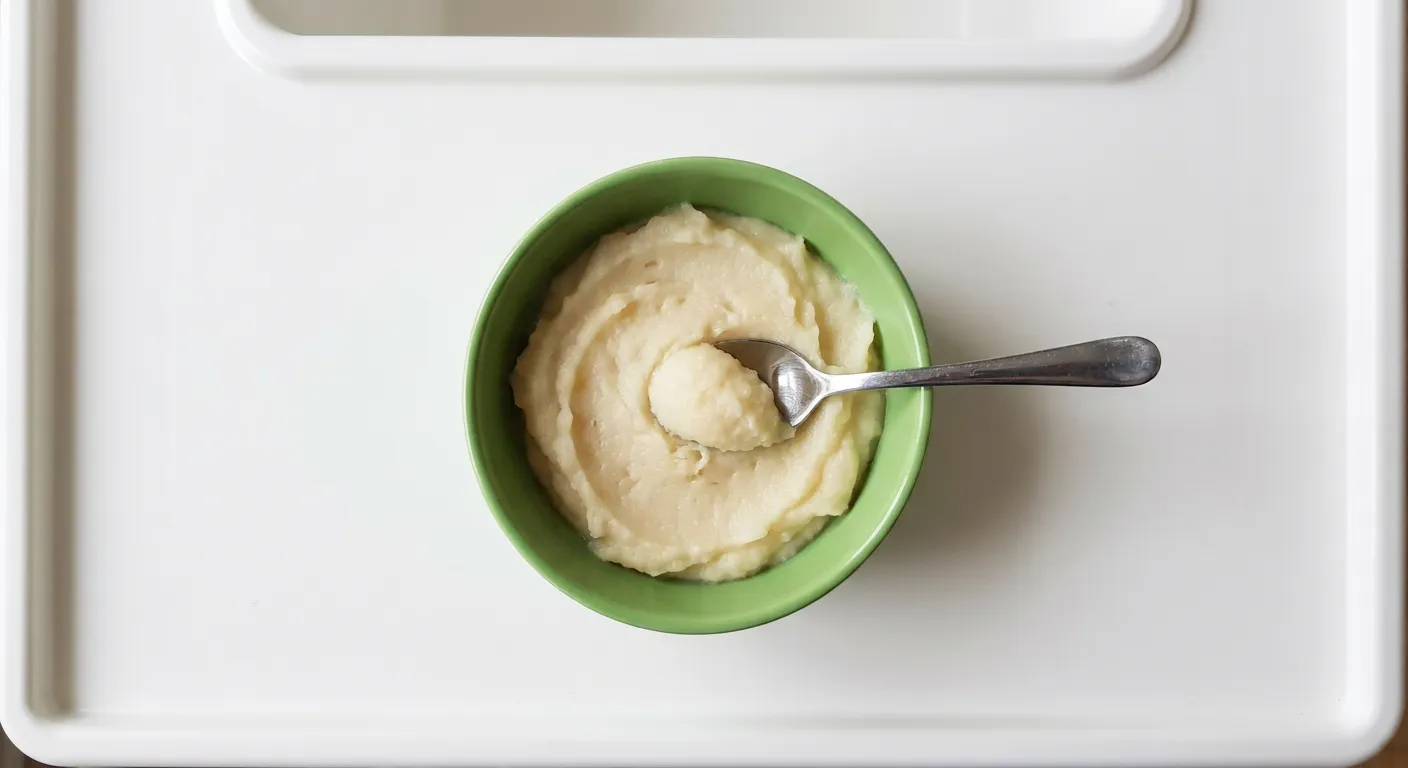
We can start her on plain mashed sweet potato, boiled or steamed until it is very soft, then mashed smooth so it stays on the spoon without running off. If it feels thick or dry, you can loosen it with a little of your breastmilk, formula, or water to a soft, scoopable mash.
You can also stir a little of it through a food she already takes. Keep it plain: no added salt until she turns one, no added sugar before she is two, and no honey before her first birthday, since it can cause botulism, a serious illness in babies. Just a spoonful or two to start, then let her appetite lead.
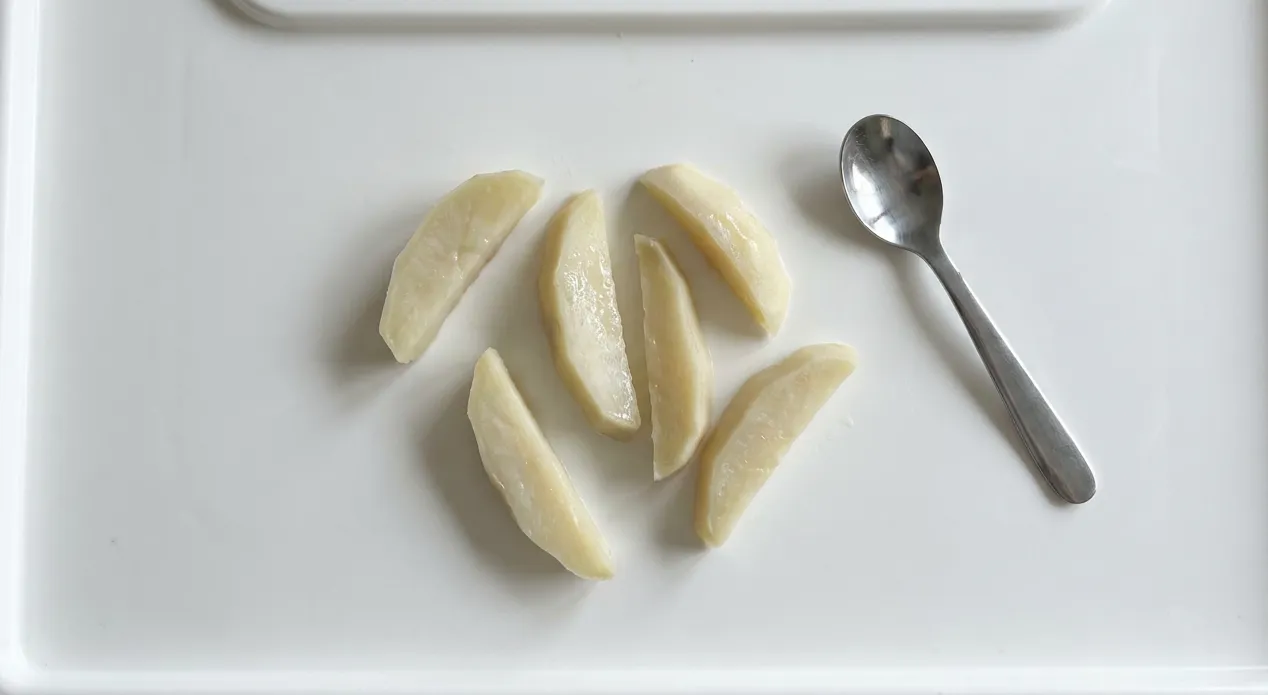
Now she can pick up soft-cooked sweet potato herself, as bite-size pieces or soft wedges about half an inch wide. Cook them soft enough to squash easily between your fingers, so they stay gentle on her gums.
Picking the pieces up is good practice for her pincer grasp, where her thumb and finger learn to meet. A firm or undercooked piece is what makes her gag, so keep them soft and give just a few at a time. She can still have her smooth mash alongside, whichever she takes to that day.
Spoon, fingers, or both? ›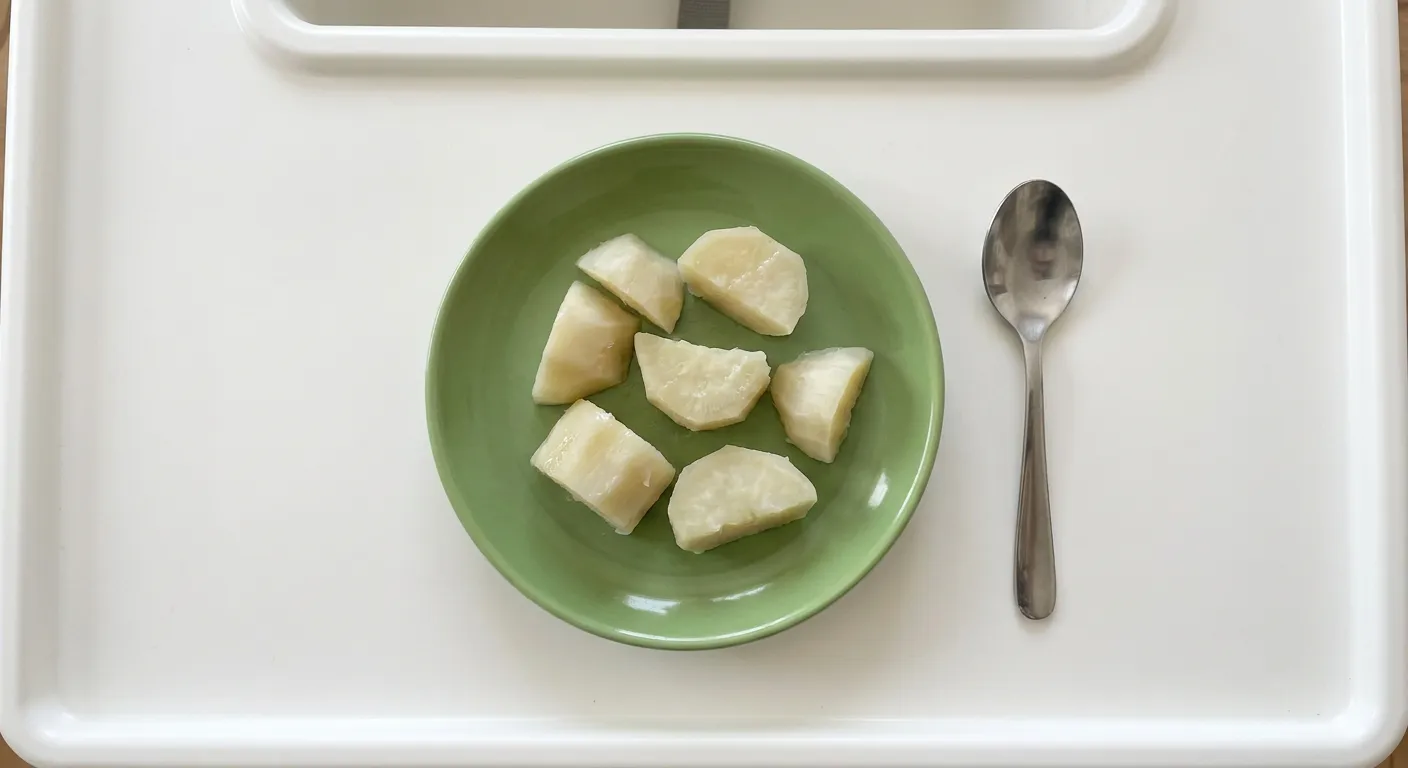
By a year, sweet potato is just part of what the whole family eats. Serve it as soft wedges or bite-size pieces from the same pot, mashed only if she needs it. This is also a good age to let her practise with a fork.
Keep the pieces soft enough to squash, since bigger firm pieces are harder for her to manage. She decides how much now, alongside everything else on her plate.
Spoon, fingers, or both? ›About sweet potato
Sweet potato suits a baby from six months, cooked soft and mashed smooth for her first spoons. The ICMR-NIN counts it among the starchy roots and tubers that give good energy from a small tummy. If you find the orange-fleshed kind, ICMR-NIN and WHO count it among the vitamin-A-rich vegetables. Its colour is beta-carotene, which her body turns into vitamin A.
The doubts we clear
CHOKINGWill she choke on sweet potato?
MYTHA plain, well-cooked sweet potato is an ordinary first food for most babies. You don't need to add jeera, ajwain, or any special spice to make it sit well on her tummy.
Questions moms ask
My shakarkandi mash for my 6-month-old came out really thick and dry. Can I loosen it with breastmilk?
Someone suggested sweet potato for my little one who isn't gaining much weight. Is it a weight-gain food?
I keep hearing sweet potato is 'heaty' or 'cooling' and should not be given in the evening or in winter. Is that right?
Should I try baby-led weaning with sweet potato?
How much sweet potato, and how often?
Know a mom who needs this?
Send it on WhatsAppEvery page is checked against ICMR-NIN, IAP and WHO guidance.
Sources: IAP, ICMR-NIN and 2 more sources ›