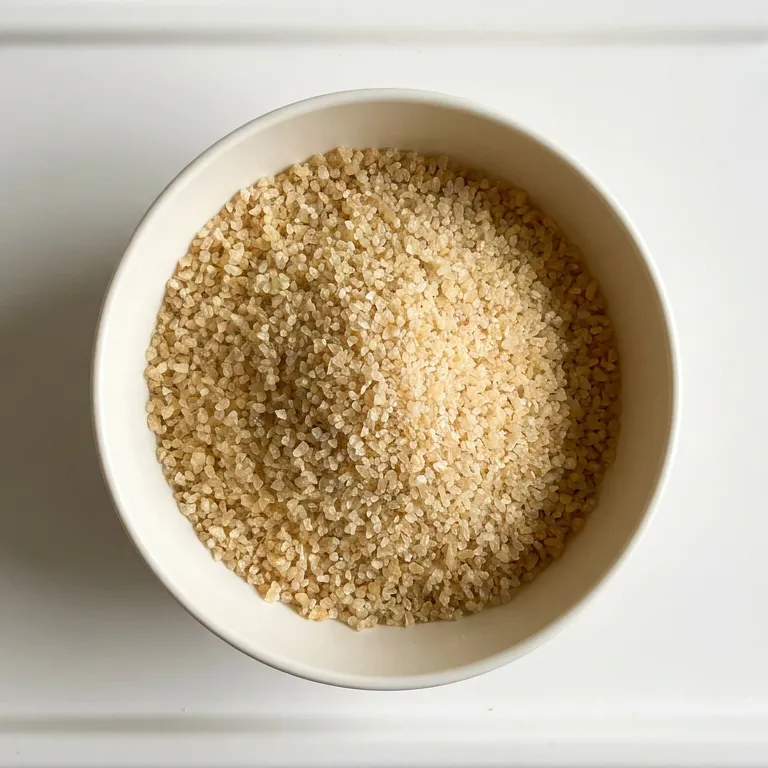
Also called suji, shuji, rava, ravva
How to serve, by her age
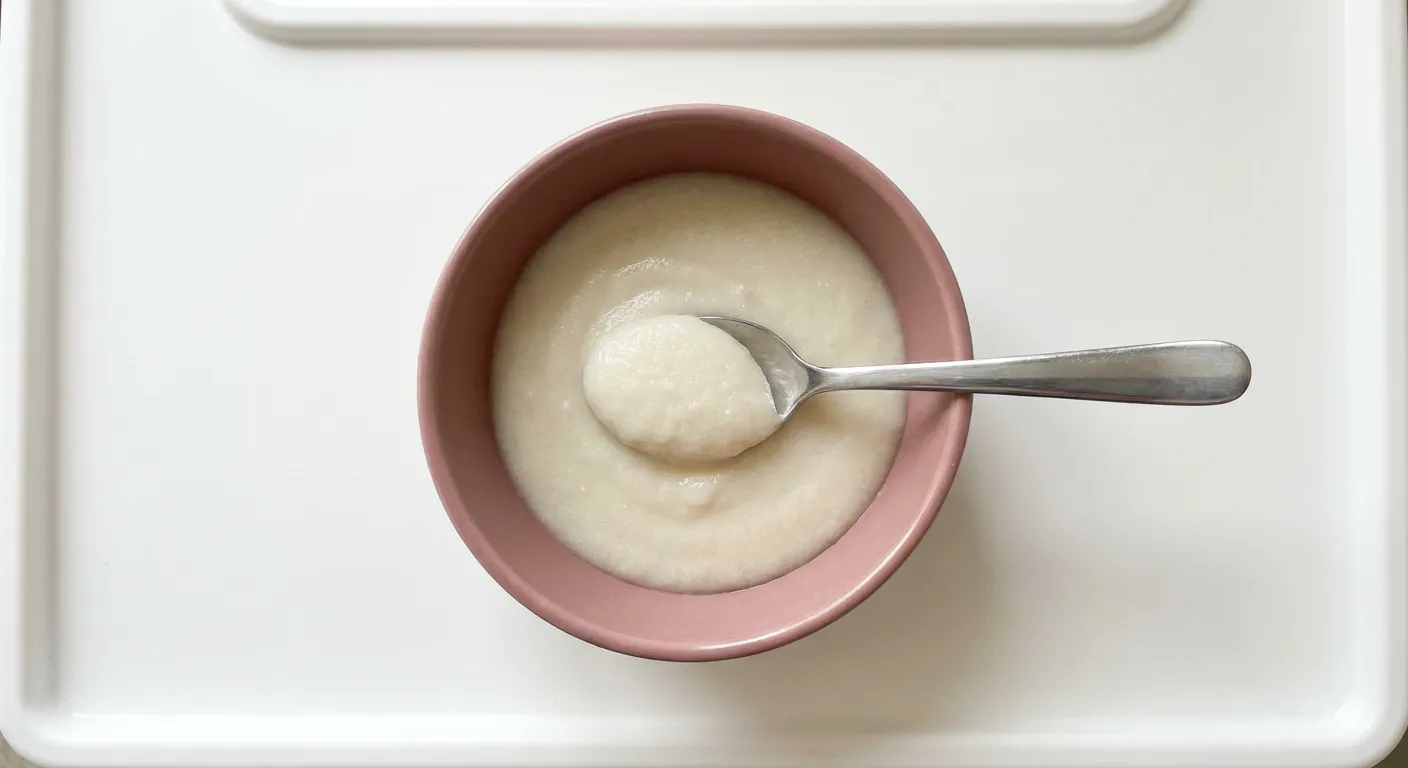
Cook a spoon or two of sooji in a little water until it is soft and smooth, then loosen it with breast milk, formula, or water so it stays on the spoon. Serve it warm and plain, with no salt while she is this young, from a spoon, starting small. Let her appetite decide how much, a little some mornings and more on others, both perfectly fine. Once she is enjoying the plain porridge, you can stir in a little mashed fruit or soft vegetable for flavour.
If she finds the porridge a little grainy, you can grind the sooji to a fine powder first so it cooks up smoother for her.
The same soft cooking can become the upma your kitchen already knows, loose and plain: add the sooji to hot water a little at a time, stirring so it stays lump-free, then thin it to a soft pouring consistency.
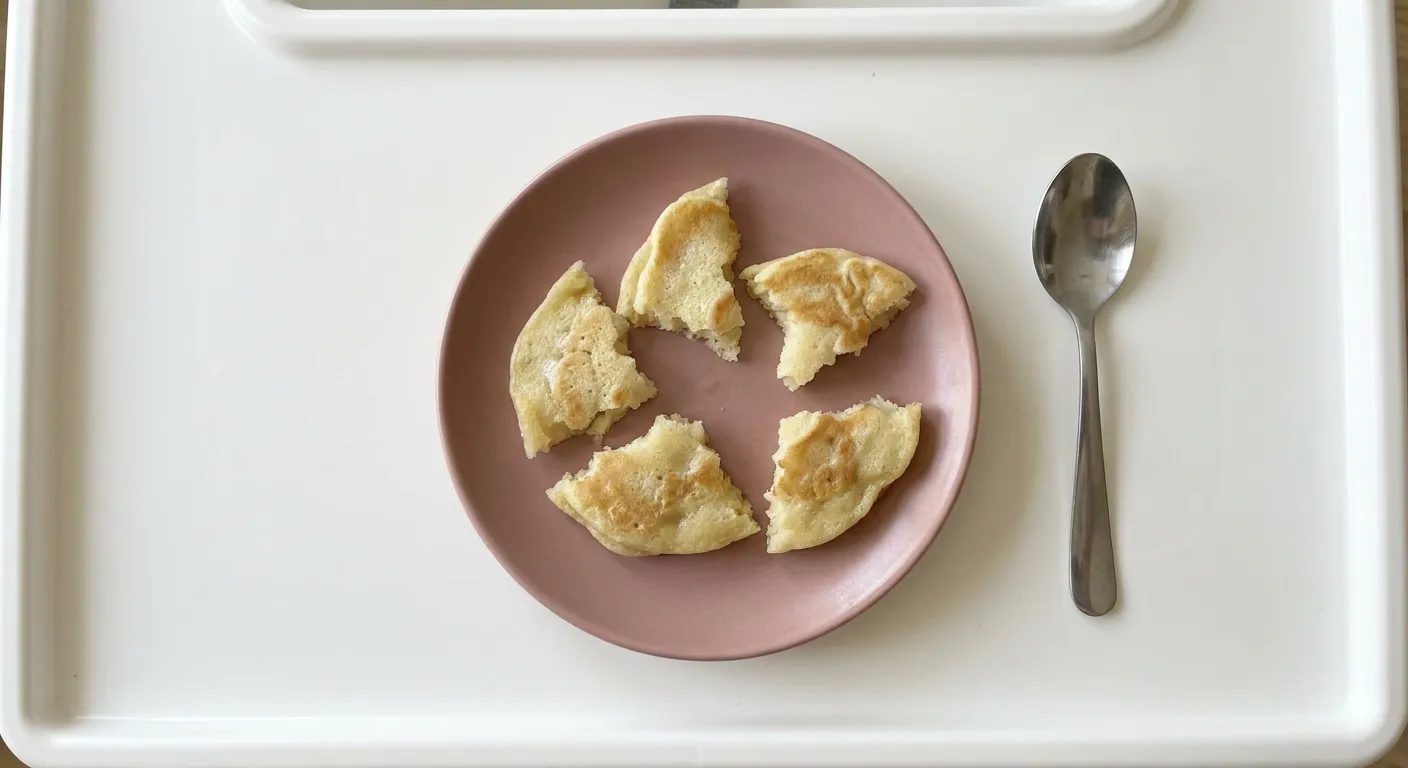
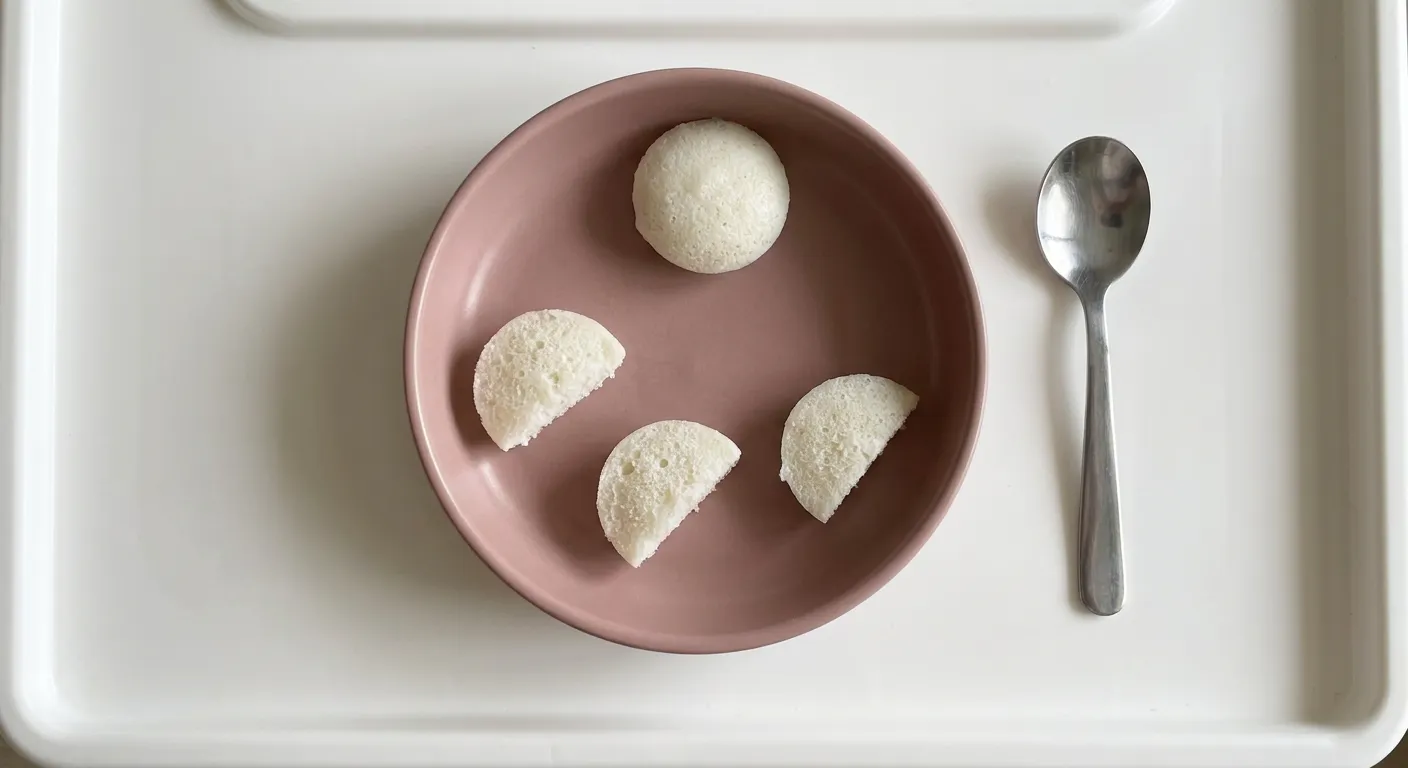
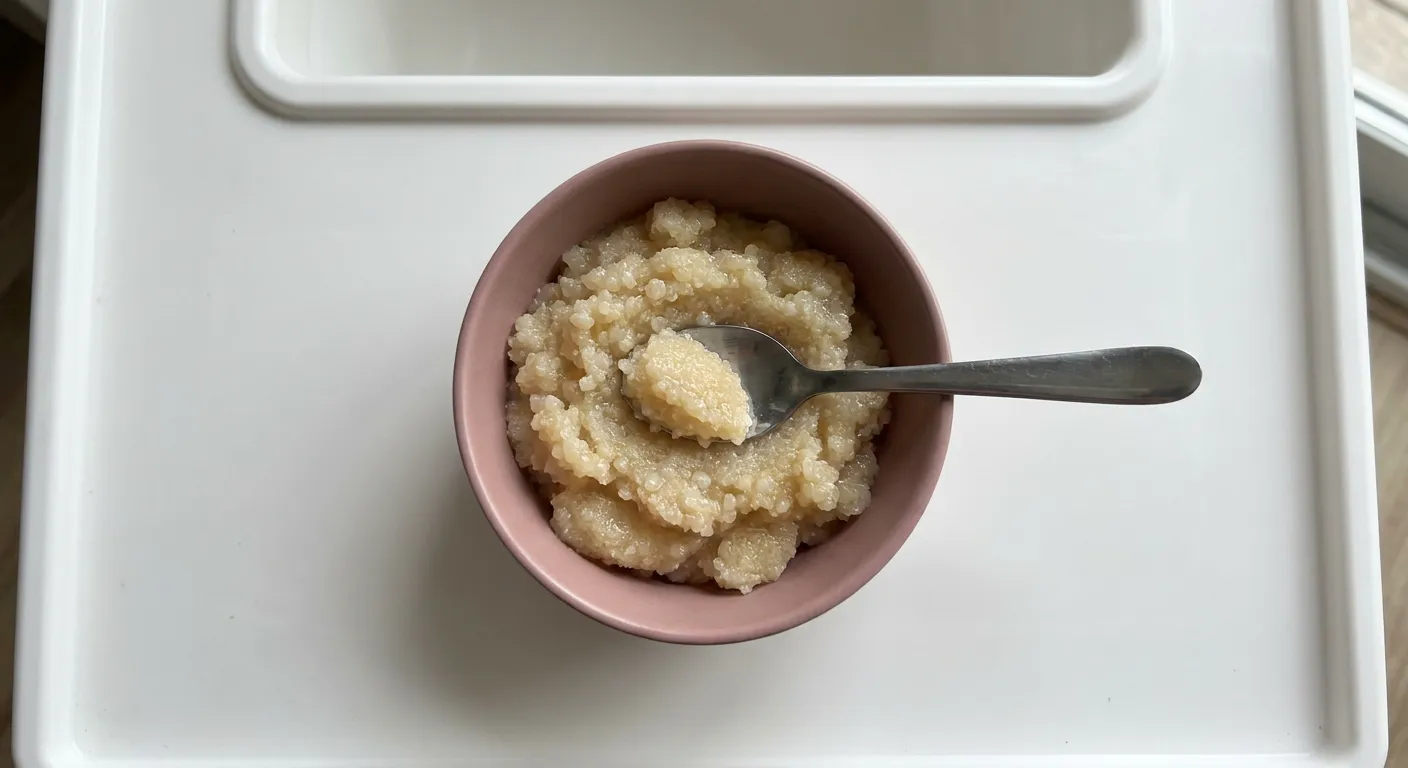
By now the porridge can be a little thicker and lumpier, and her upma can thicken up the same way, its grains soft but no longer pouring. This is also the age she can start having sooji as soft patties, little pancakes, or dumplings, cut into small pieces she can pick up to practise her pincer grasp. Keep them small and soft.
If your family already makes rava idli, this is about the age she can begin having it too.
Spoon, fingers, or both? ›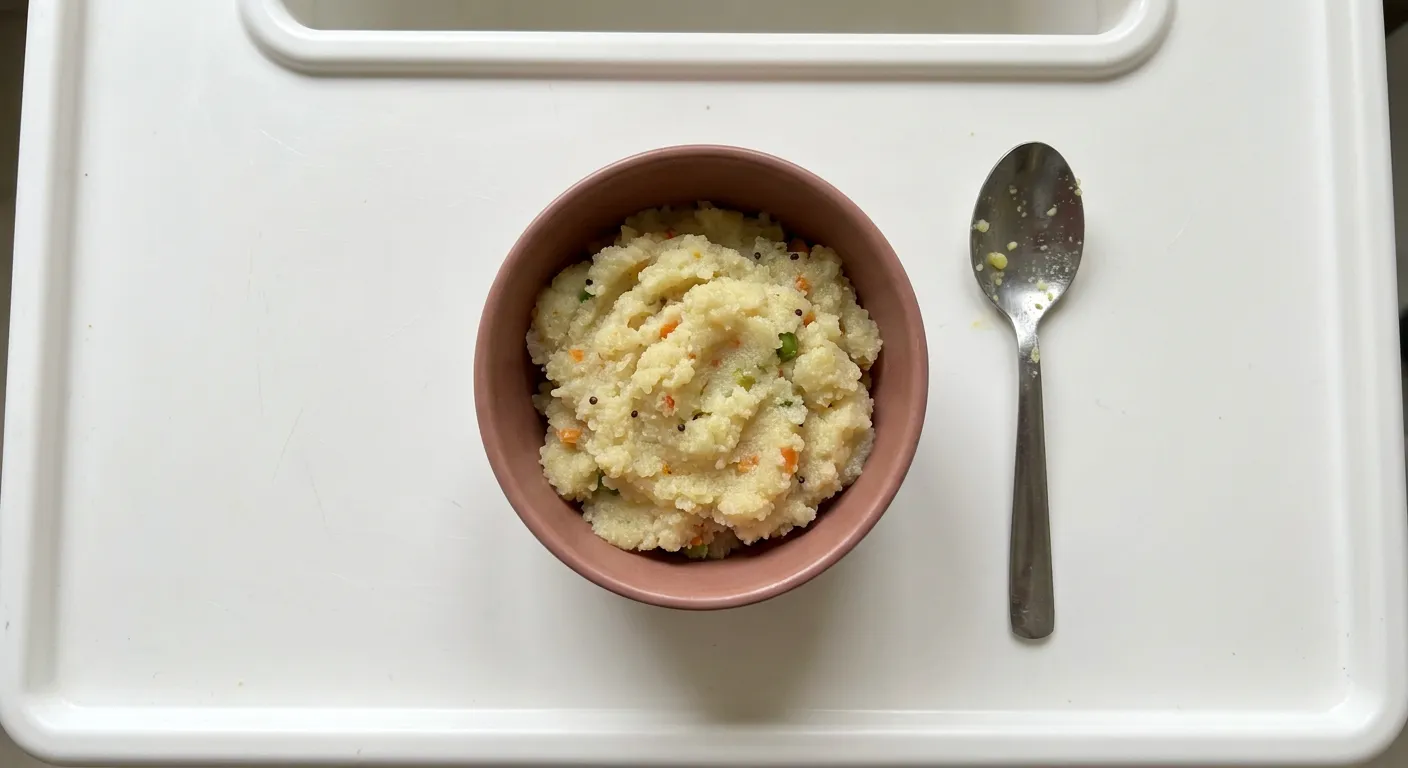
By her first birthday she can eat sooji much the way the rest of you do: the same porridge, now thick, along with soft breads, pasta, upma, and other grain dishes made from sooji, chopped or mashed where a piece needs it.
A thicker porridge clings to the spoon, which makes her early tries at feeding herself a little easier. Keep going light on salt, and skip added sugar until she is two.
Spoon, fingers, or both? ›About sooji
Cooked sooji makes a soft, smooth porridge that a baby can take easily from six months, with gentle energy from its complex carbohydrates and B vitamins. Wheat is a common allergen, but you do not need to delay it; the AAP finds no benefit to putting wheat off past around six months.
The doubts we clear
CHOKINGWill she choke on sooji?
ALLERGENWhat does a reaction look like?
MYTHA well-cooked sooji porridge is soft and gentle, easy for a baby to swallow. It is not too heavy for her to digest.
Questions moms ask
My baby turns away from rava porridge no matter how I cook it. Is something wrong?
My little one is on the smaller side and everyone keeps pushing ghee-heavy rawa to fatten her up.
Do I need to add sugar, jaggery or cow's milk to make sooji a proper, filling meal?
Should I let her start feeding herself sooji?
How often can I give sooji, is every day okay?
Sooji has gluten, is it safe, and should I wait until my baby is older to give it?
Should I dry-roast the rava before cooking it?
Know a mom who needs this?
Send it on WhatsAppEvery page is checked against ICMR-NIN, IAP and WHO guidance.
Sources: IAP, ICMR-NIN and 3 more sources ›