Papaya

Also called papita, pepe, pappali, boppayi

Safe from6 months
Choking riskLowOnly fully ripe, seeds out
AllergenNot common
Iron-richNo
Rich inVitamin A

How to serve, by her age

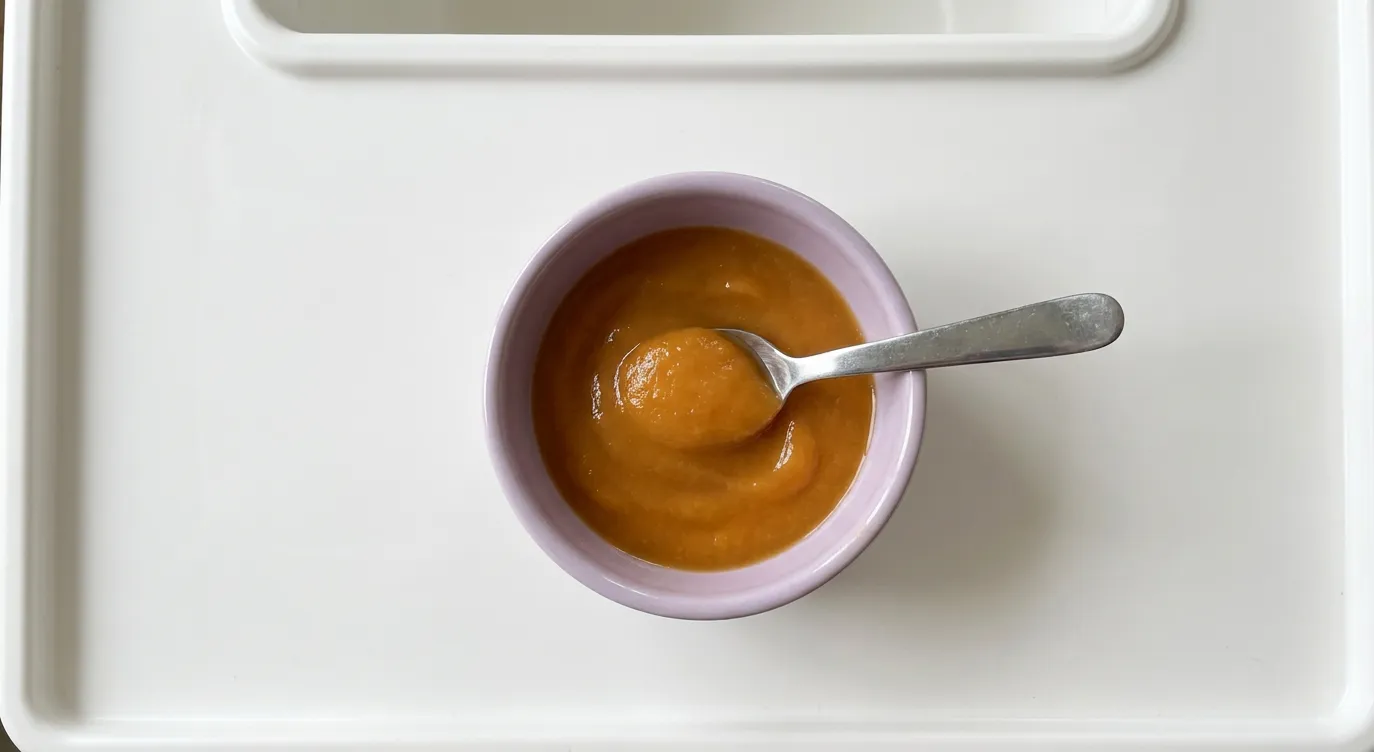
Papaya at 6+ months: Smooth ripe mash
Smooth ripe mash

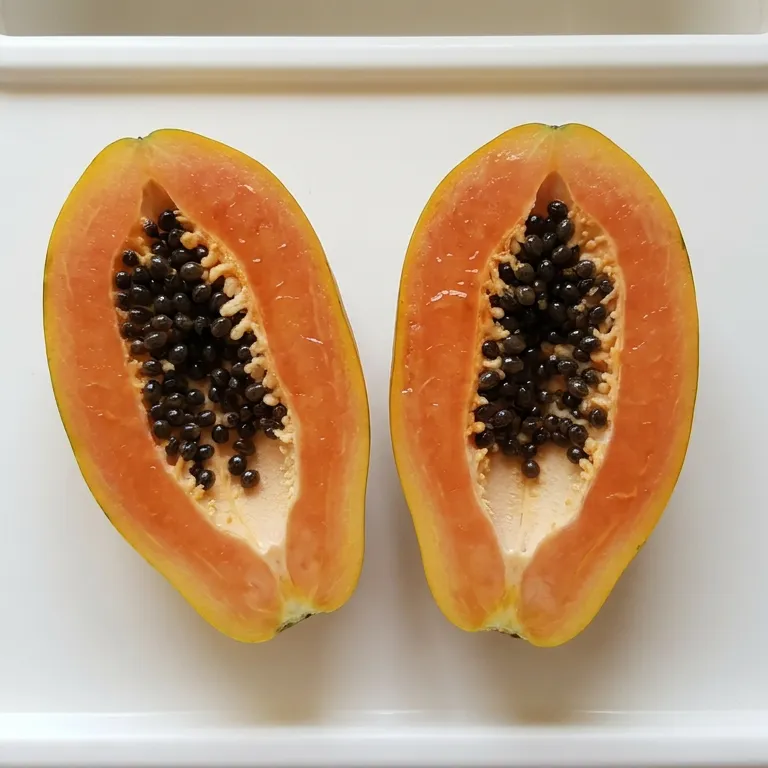
We start her on mashed ripe papaya. You want one that is fully ripe and soft, with the skin peeled off and every seed scooped out. The flesh is soft and pulpy, so a fork mashes it smooth with no cooking at all. If it feels thick, you can loosen it with a little breast milk, formula, or water, just keep it a mash and not a thin juice.

Ripe papaya has its own sweetness, so nothing needs to go in: no sugar before she turns two, and no added salt in this first year. A spoonful can also go into a food she already takes, though it is just as nice on its own. Keep those very first tastes small, and let her own appetite decide how much she wants.
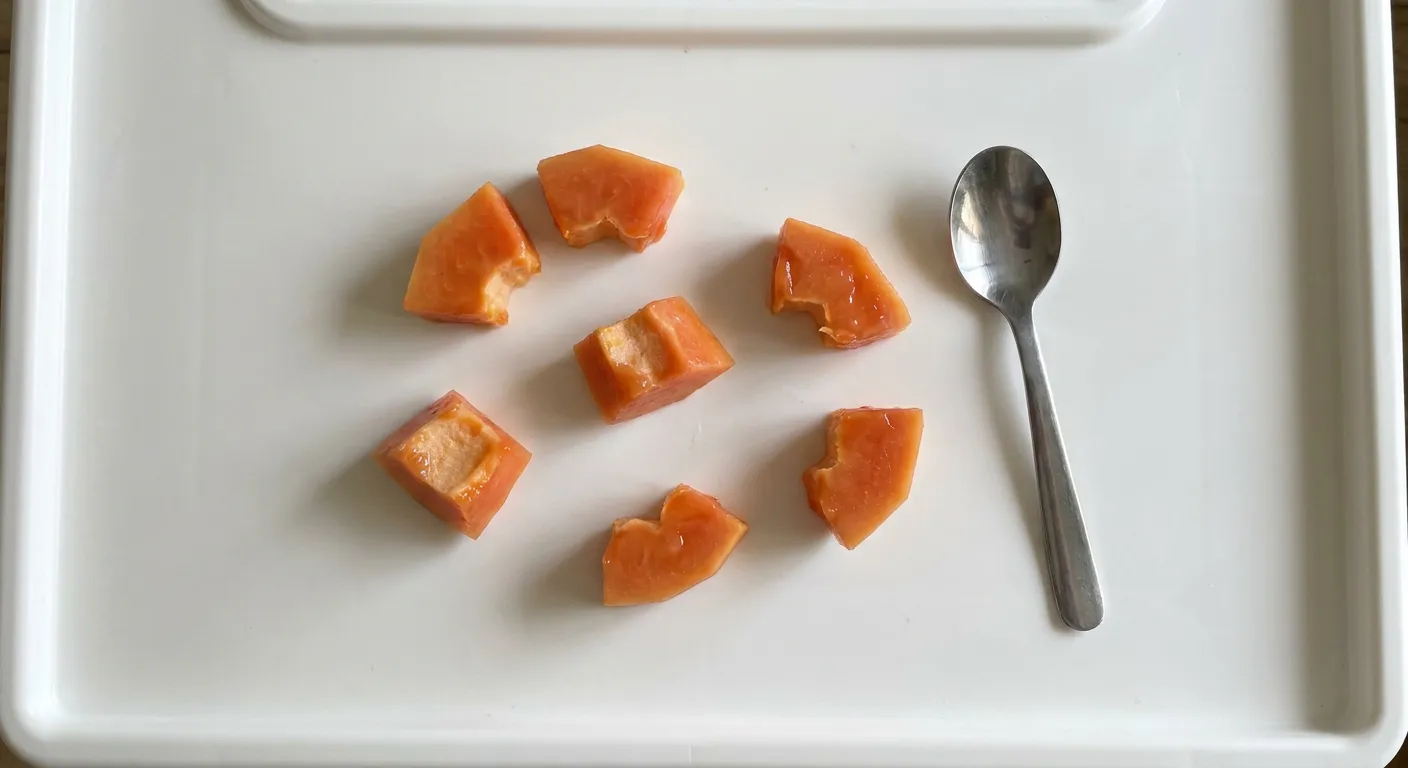
Papaya at 9-12 months: Soft bite-size pieces
Soft bite-size pieces

Now that she can pick things up, ripe papaya can come as soft bite-size pieces she feeds herself. Keep it fully ripe and soft enough to squash between your fingers, with the skin and seeds taken out. Small soft pieces, rather than round chunks, let her practise the pincer grasp she is building.

If the pieces are too slippery for her to hold, you can roll them in a little shredded coconut for grip, or go back to a soft mash for a while. Stay close while she eats, and let her appetite decide how much she takes.

Spoon, fingers, or both? ›
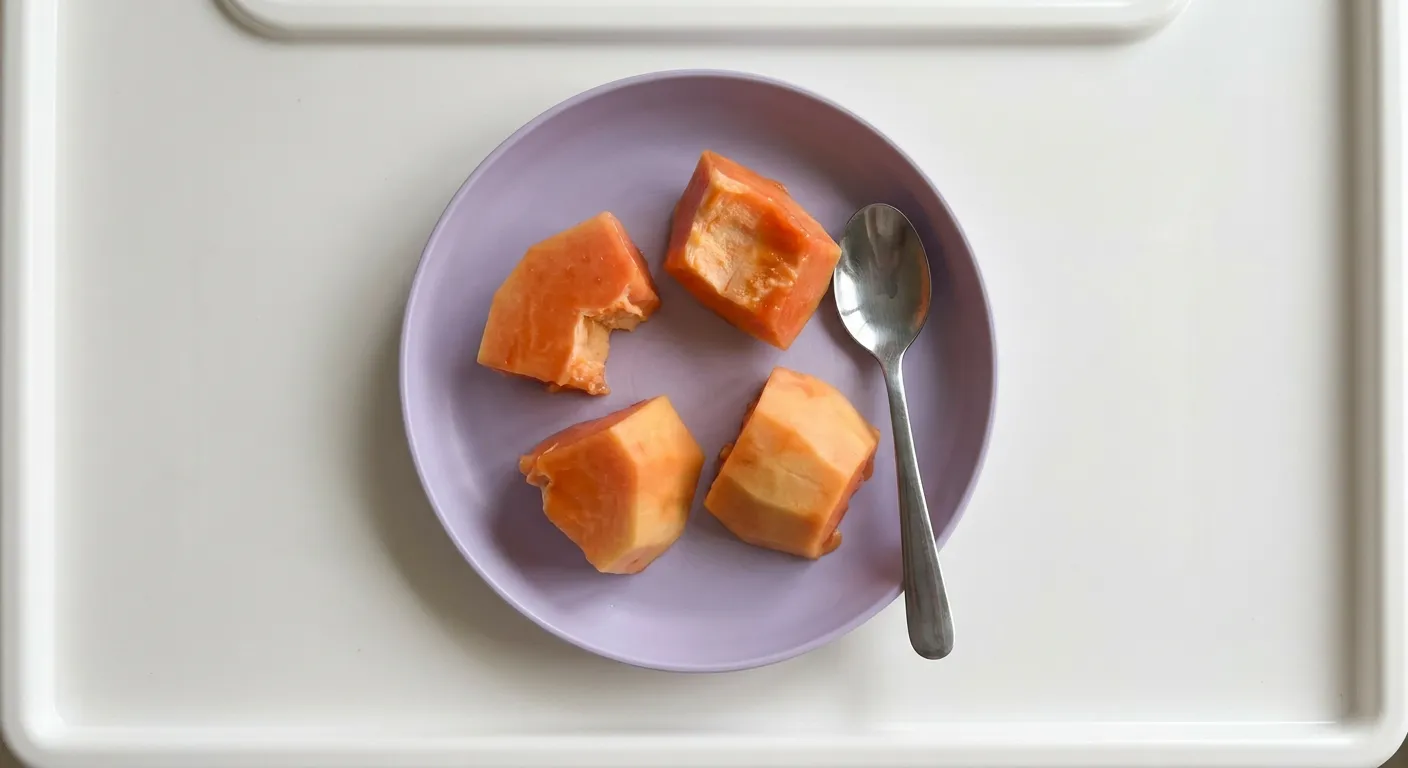
Papaya at 12+ months: Soft ripe pieces
Soft ripe pieces

From a year, papaya is simply part of the family's fruit. She can have it as soft, ripe pieces she manages with her fingers or a small fork, still with the skin and seeds taken out.

She may go back and forth between fingers and a spoon for many months yet, and that is completely normal. Ripe papaya stays an easy everyday fruit, whether she has it on its own or with the rest of her meal.

Spoon, fingers, or both? ›

About papaya

Ripe papaya is one of the deep-orange fruits ICMR-NIN and the IAP count among the vitamin-A-rich foods. She can have it from six months, when it mashes to a soft, smooth spoonful, and Indian guidance names it among the first soft fruits.

The doubts we clear

CHOKINGWill she choke on papaya?
Underripe or green papaya is firm and slippery, and a firm, slippery piece raises the choking risk. Use papaya that is fully ripe and soft, take off the skin, and scoop out every seed. At six months serve it as a smooth mash. From around nine months, cut it into small soft pieces rather than round chunks.Choking vs gagging ›
MYTHRipe papaya is a good fruit for your baby in every season. It is not a 'heaty' food you need to keep away in summer.
The Indian Academy of Pediatrics lists papaya among the foods wrongly called 'hot' for a child and says babies need these foods for their nutrients. If it settles any worry at home, you can offer papaya earlier in the day rather than at night. It stays a good fruit right through the year.

Questions moms ask

I gave mashed papita for her constipation, and now she has loose stools daily. Too much?
Possibly, yes, if papaya was coming at every meal. Drop back to a small serving once a day and keep her other foods as they are. A baby's poop also changes a lot once solids begin, so some of this is simply her settling in. If the loose motions carry on, your paediatrician can check her.
I keep hearing raw papaya is risky in pregnancy. Could a less-ripe piece hurt my baby?
That pregnancy caution is about raw, unripe papaya in pregnancy, which is a different situation from feeding your baby. Ripe papaya is one of the soft first fruits Indian guidance names for babies. Just pick fruit that is fully ripe and soft, not firm green pieces, and she is on safe ground.
Should I spoon-feed papaya or let her pick up the pieces herself?
Both work, at their own stage. Early on, papaya goes off the spoon as a smooth ripe mash. From around nine months, when she can pick things up, set down soft bite-size pieces she feeds herself. Let her use fingers and spoon in whatever mix suits her.Spoon, fingers, or both? ›
Everyone swears papaya fixes constipation. Does it really, and what if it doesn't work?
The honest answer is there is no strong proof papaya itself clears constipation, so treat it as an everyday fruit, not a cure. If she is straining, a little extra water and gently cycling her legs or a soft tummy rub can help things move. If it does not settle, your paediatrician can guide you.
I keep seeing papaya recommended at 7 to 8 months, and some elders say wait till 9 to 12. Why the different ages, and is six months okay?
Six months is fine for papaya. Solids start at six completed months in the main guidelines, and Indian guidance names papaya among the first soft fruits from then. You will also see 7 or 8 months suggested a lot, and some families wait longer, which is habit and comfort. If your baby is six months and ready, a soft ripe mash is a gentle place to begin.Start here ›
How much papaya, and how often, at this age?
Papaya can be an everyday fruit, one of two or three she rotates through. A spoonful or two is plenty to begin, and that can grow over the months to a few spoonfuls or a small katori as her appetite says.How much she should eat ›

Still have a question?

I read every message myself and reply.

WhatsApp me

Know a mom who needs this?

Send it on WhatsApp

Every page is checked against ICMR-NIN, IAP and WHO guidance.

Sources: IAP, ICMR-NIN and 3 more sources ›

Educational only, and never a replacement for your paediatrician. Read the full note ›