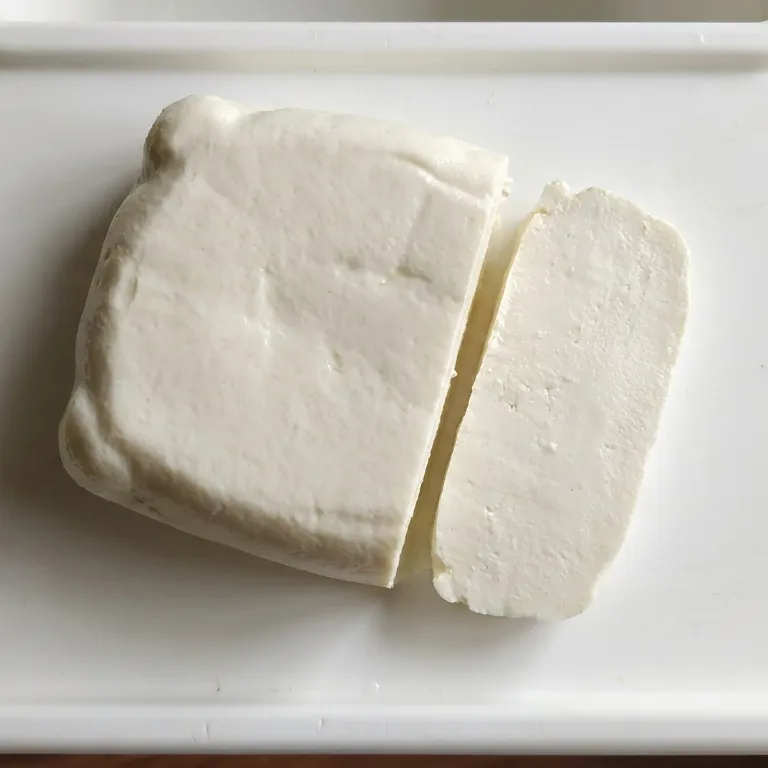
Paneer

Also called panir, ponir, cottage cheese, chhena

Safe from6 months
Iron-richNo
Rich inHigh-protein

How to serve, by her age

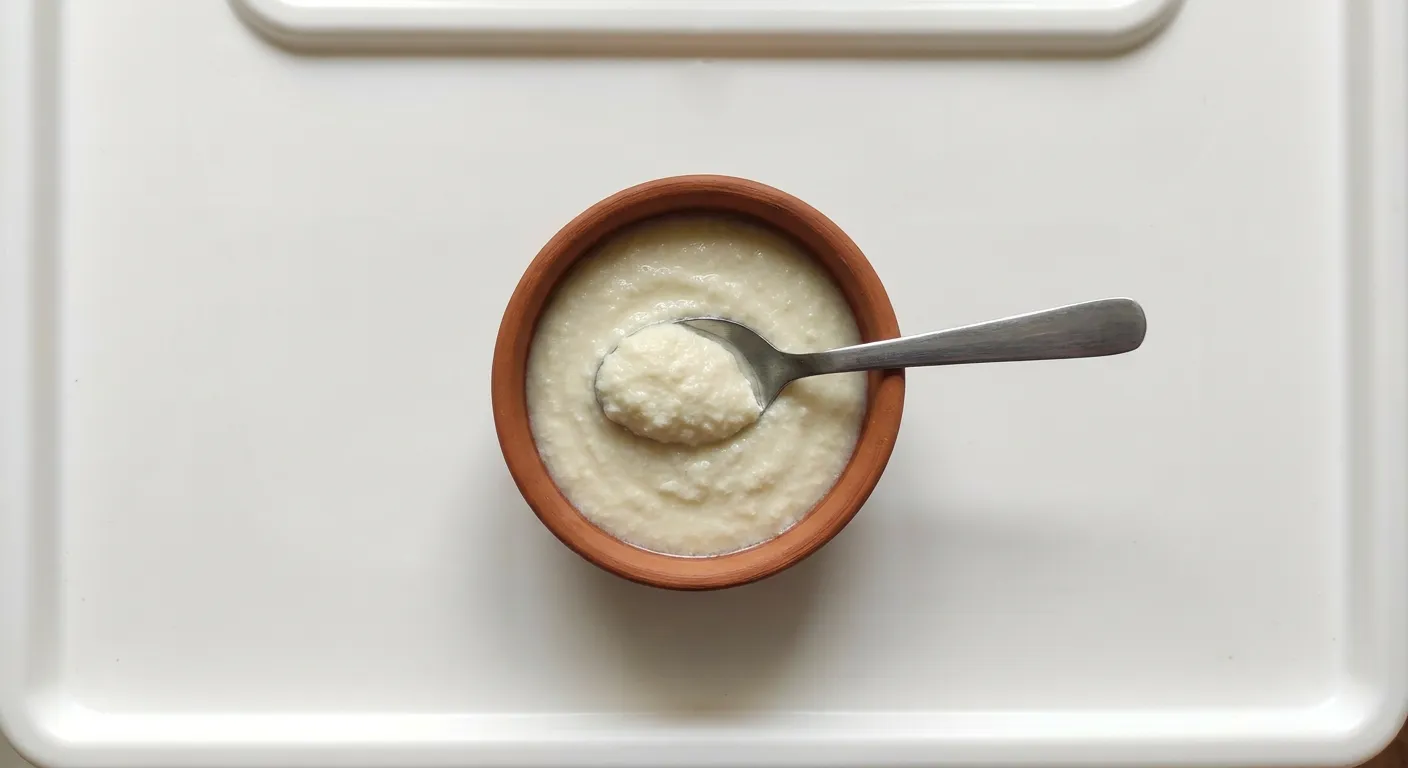
Paneer at 6+ months: Soft mash or fine grate
Soft mash or fine grate

At six months she can have paneer as a soft mash. Cook it through until it gives easily, then mash it with a fork until no firm bits are left. A little of her usual milk or warm water loosens it so it scoops up soft.

Mashed or finely grated, it stirs through dal, khichdi, mashed vegetables or porridge she already takes.

Nothing salty goes in with it at this age, and sugar and jaggery both wait until she turns two.
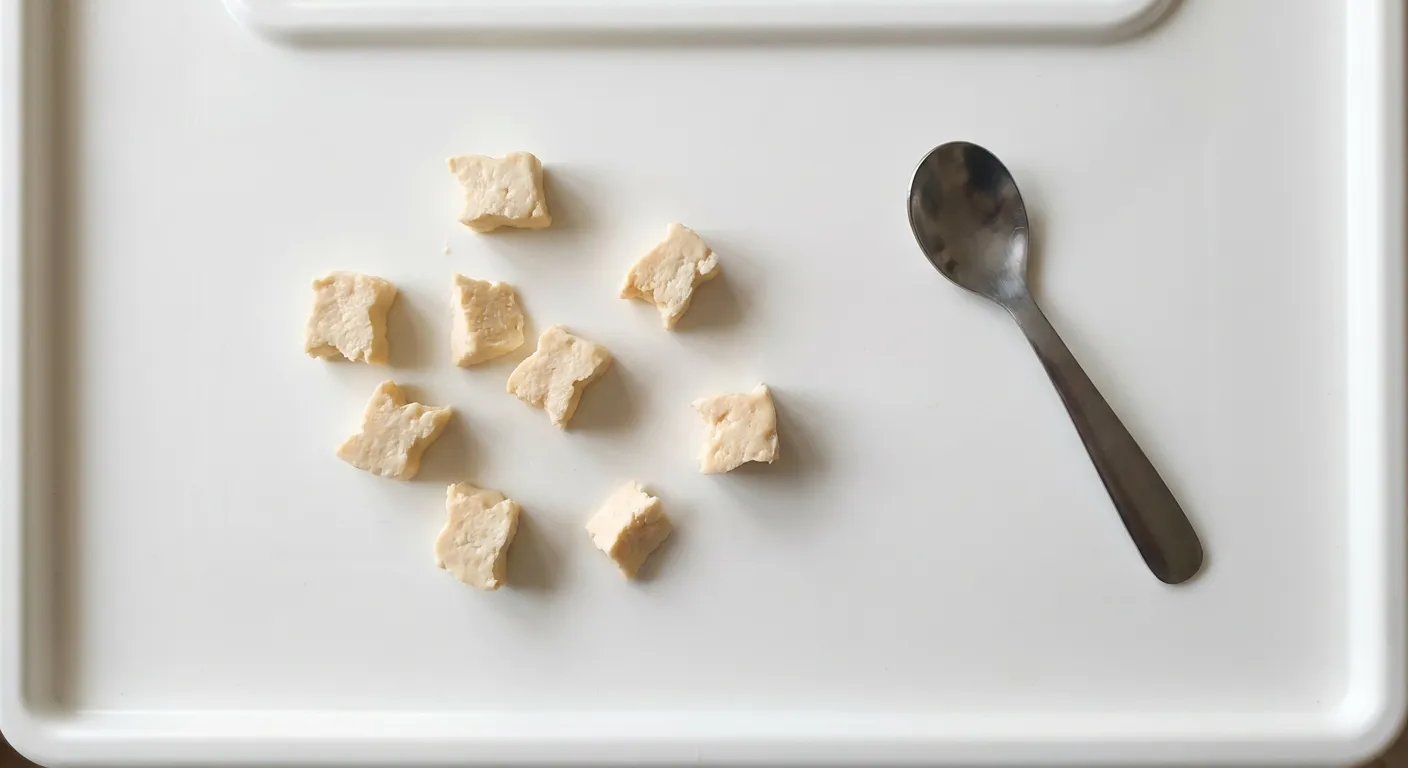
Paneer at 9-12 months: Crumbles or small soft pieces
Crumbles or small soft pieces

From nine months she is ready for pieces rather than the mash she has been taking. You can steam or boil the paneer until it is soft enough to mash easily with a fork. Once it is cooked, give it two or three minutes in a bowl of warm water before you crumble or chop it. Crumbles and small bite-sized pieces cut from a flat slice are both easy for her to pick up.

By now her crumbles can be coarser than the fine grate she took in the early months, and grated paneer still stirs nicely through her soft foods. Pieces this size give her good practice at her pincer grasp.

Keep every piece soft and no bigger than your fingertip, and stay beside her while she eats. No added salt goes into her food while she is under one.

Spoon, fingers, or both? ›
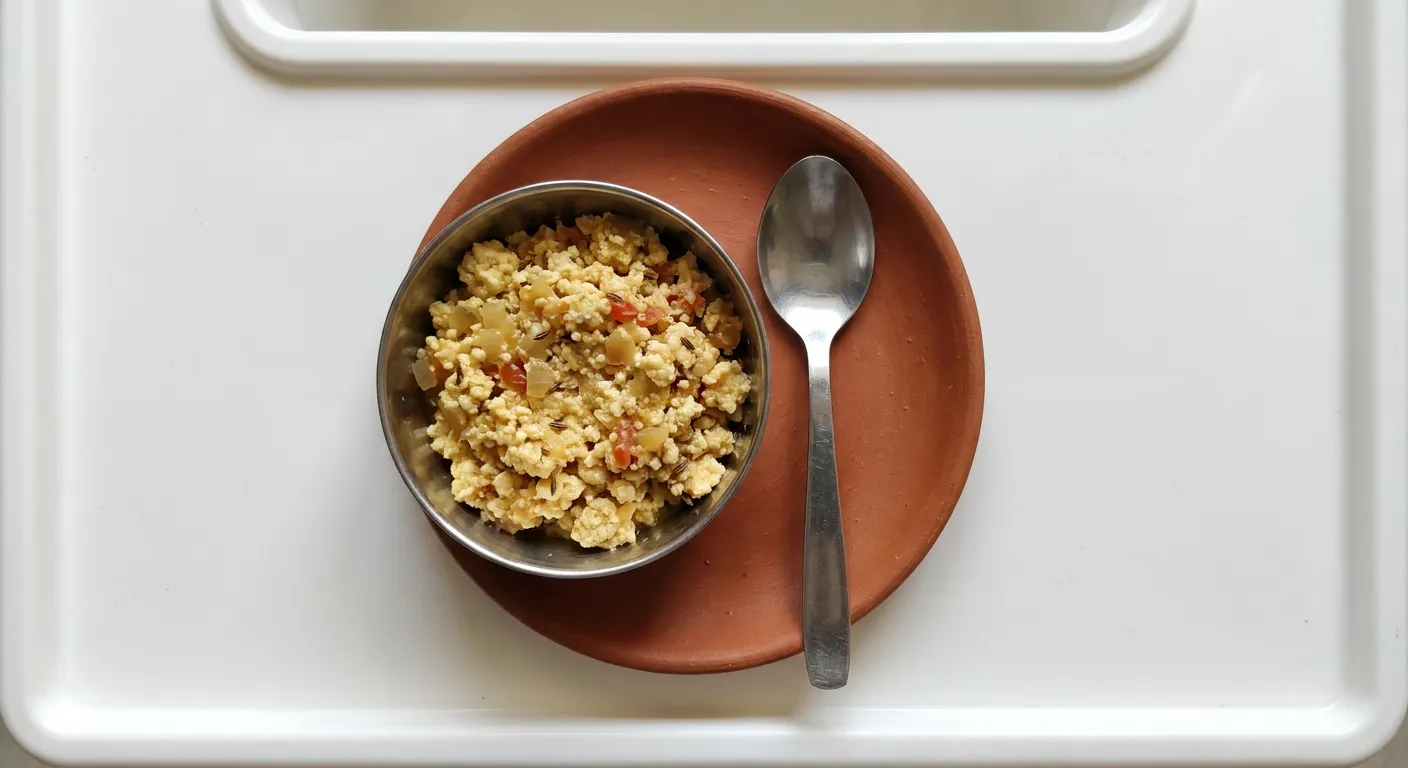
Paneer at 12+ months: Paneer bhurji
Paneer bhurji
Paneer at 12+ months: Soft cubes or matchsticks
Soft cubes or matchsticks

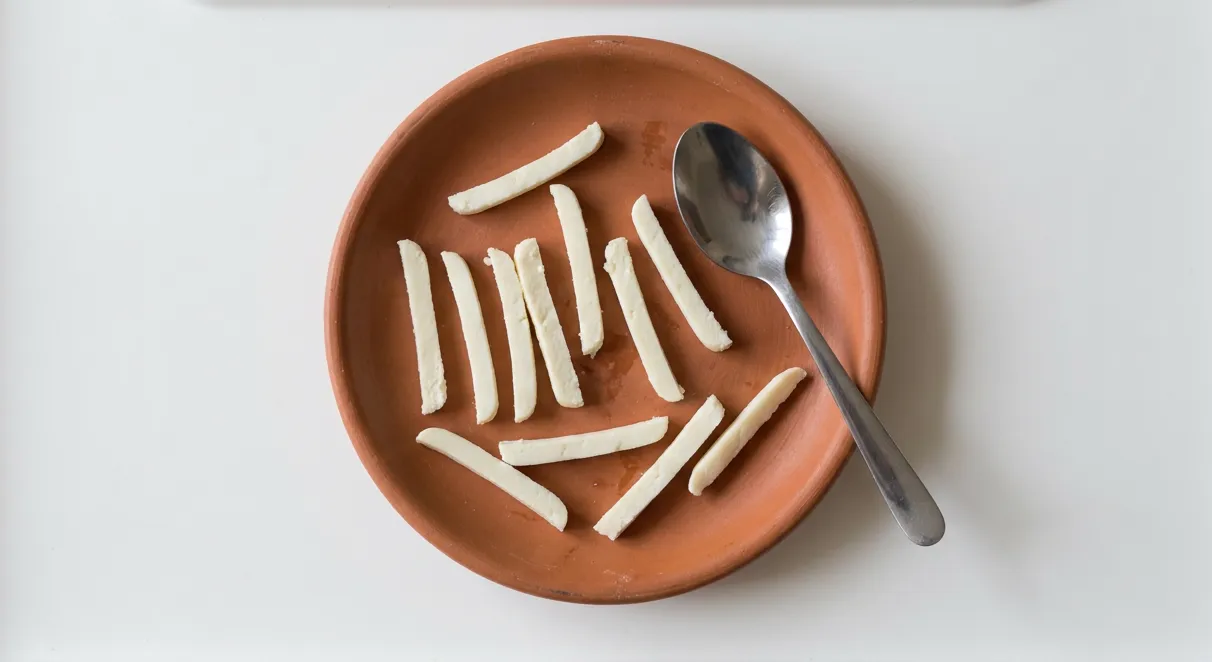
By a year paneer can go on her plate as soft cubes or matchsticks, on their own or as part of what everyone is eating. Thin fingers about as long as your little finger are easy for her to hold.

If your family already makes paneer bhurji, she can start having a little of it around a year.

A firm piece is still the thing to watch, so press each cube with a fork before it goes on her plate and check that it gives easily. Go light on the salt and spice in the shared pot, and sugar and jaggery still wait until she is two.

Spoon, fingers, or both? ›

About paneer

Paneer brings dairy's protein and fat in a form soft enough for a brand-new eater, and ICMR-NIN names it among the good sources of protein. She can start on it from around six months, once she is ready for solids. The WHO counts dairy among the food groups she needs right through her first two years.

The doubts we clear

CHOKINGWill she choke on paneer?
Paneer stays firm and springy, and a whole cube keeps its shape against her gums instead of softening, so it can block her airway. Cook it through until it is soft, mash it at six months, then from nine to twelve months keep the pieces no bigger than your fingertip. After her first birthday she can manage soft cubes and matchstick shapes. Keep her sitting up and stay beside her while she eats.Choking vs gagging ›
ALLERGENWhat does a reaction look like?
Dairy is one of the common allergens, so we give paneer on its own first and watch her over the next few days before bringing in another new food. Cow's milk allergy is not very common in Indian children, and going slowly just makes a reaction easier to spot.Starting egg, nuts and other allergens ›
MYTHA plain shop-bought paneer made from pasteurised milk is fine for her. It does not have to be homemade to be safe.
What matters is the milk, not the kitchen it came from. Check that it is made from pasteurised milk and that the ingredient list is plain, because some paneer sold in packets carries soy or other common allergens. If making it at home feels better to you, it genuinely is the plainest version, and ICMR-NIN groups home-made paneer with the least-processed foods. Either way, keep it in the fridge.

Questions moms ask

My nine-month-old gagged so hard on a paneer strip that I froze. Back to grating it?
That gag on a springy bit of paneer is frightening to watch. Strips suit her after she turns one, so step back to the soft crumbles she was already managing, then offer small pieces again once she has had more practice. Many of us go back a texture for a while, and it settles.Choking vs gagging ›
A red patch came up around her mouth the first time she had paneer. I keep checking.
A red patch where the paneer touched her skin worries every one of us. A rash that comes and goes on the chin or cheeks is often just from the food touching her skin. If she has hives or is sick after paneer, stop it and call her doctor. Trouble breathing or swelling of her lips needs help right away.Starting egg, nuts and other allergens ›
My toddler turns away from rice and roti but happily eats her vegetables and paneer.
A toddler who eats her paneer and vegetables and leaves the rice is common, not a sign you are doing something wrong. Keep putting a little roti beside what she likes, without pressing her to finish, and offer it again another day. It can take fifteen or twenty tries before she accepts a new food.When she refuses food ›
I keep hearing paneer is heavy for a baby's stomach. Should I wait a few more months?
There is no need to wait. Paneer can begin at six months, like the other dairy foods she has. Lactose intolerance is uncommon in babies and toddlers, and in children born at term it usually shows up only after age three. If her tummy does look unsettled with paneer, that is worth a word with her paediatrician rather than a longer wait. Keep the amounts small and cooked soft while she is little.
Why is paneer fine at six months when plain cow's milk as a drink waits till she is one?
The wait is only about milk as a drink, not dairy as a food. Paneer and curd are both fine from around six months, and the NHS puts pasteurised full-fat dairy foods on the list from that age. Plain cow's milk in a glass is the one that waits till her first birthday.Cow's milk ›
Should I try baby-led weaning with paneer?
Spoon and fingers both work here, at different stages. Paneer begins on a spoon, as the soft mash or fine grate she takes at six months. The IAP places most babies on finger foods around eight months, and paneer is still going in soft at that point, off a spoon. Soft, small pieces of paneer become a finger food she can feed herself from nine months.Spoon, fingers, or both? ›
How much paneer, and how often?
A spoonful or two is plenty while she is small, and it can be an everyday food. Let her appetite lead. Some days she takes more and some days less, and there is no need to press her to finish. The IAP warns that too much milk and milk products leaves little appetite for anything else. Use the full-fat kind while she is under two, and add no salt, since paneer carries some of its own.How much she should eat ›

Still have a question?

I read every message myself and reply.

WhatsApp me

Know a mom who needs this?

Send it on WhatsApp

Every page is checked against ICMR-NIN, IAP and WHO guidance.

Sources: IAP, ICMR-NIN and 3 more sources ›

Educational only, and never a replacement for your paediatrician. Read the full note ›

Will she choke on paneer?

Paneer stays firm and springy, and a whole cube keeps its shape against her gums instead of softening, so it can block her airway. Cook it through until it is soft, mash it at six months, then from nine to twelve months keep the pieces no bigger than your fingertip. After her first birthday she can manage soft cubes and matchstick shapes. Keep her sitting up and stay beside her while she eats.Choking vs gagging ›

What does a reaction look like?

Dairy is one of the common allergens, so we give paneer on its own first and watch her over the next few days before bringing in another new food. Cow's milk allergy is not very common in Indian children, and going slowly just makes a reaction easier to spot.Starting egg, nuts and other allergens ›