Oats

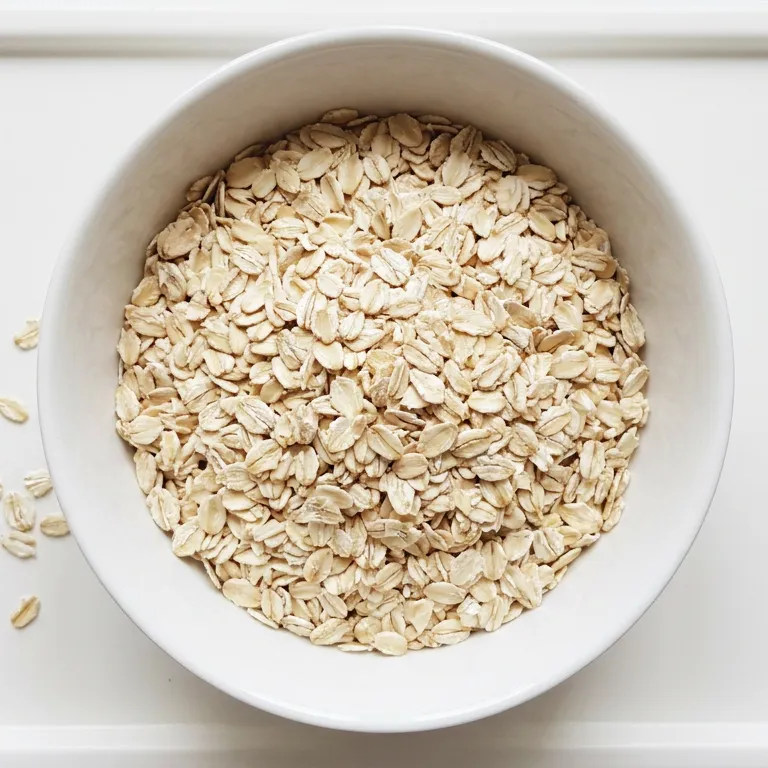
Also called oat, oatmeal, javie, rolled oats

Safe from6 months
Choking riskLowCook soft, grind coarse flakes
AllergenNot common
Iron-richNo

How to serve, by her age

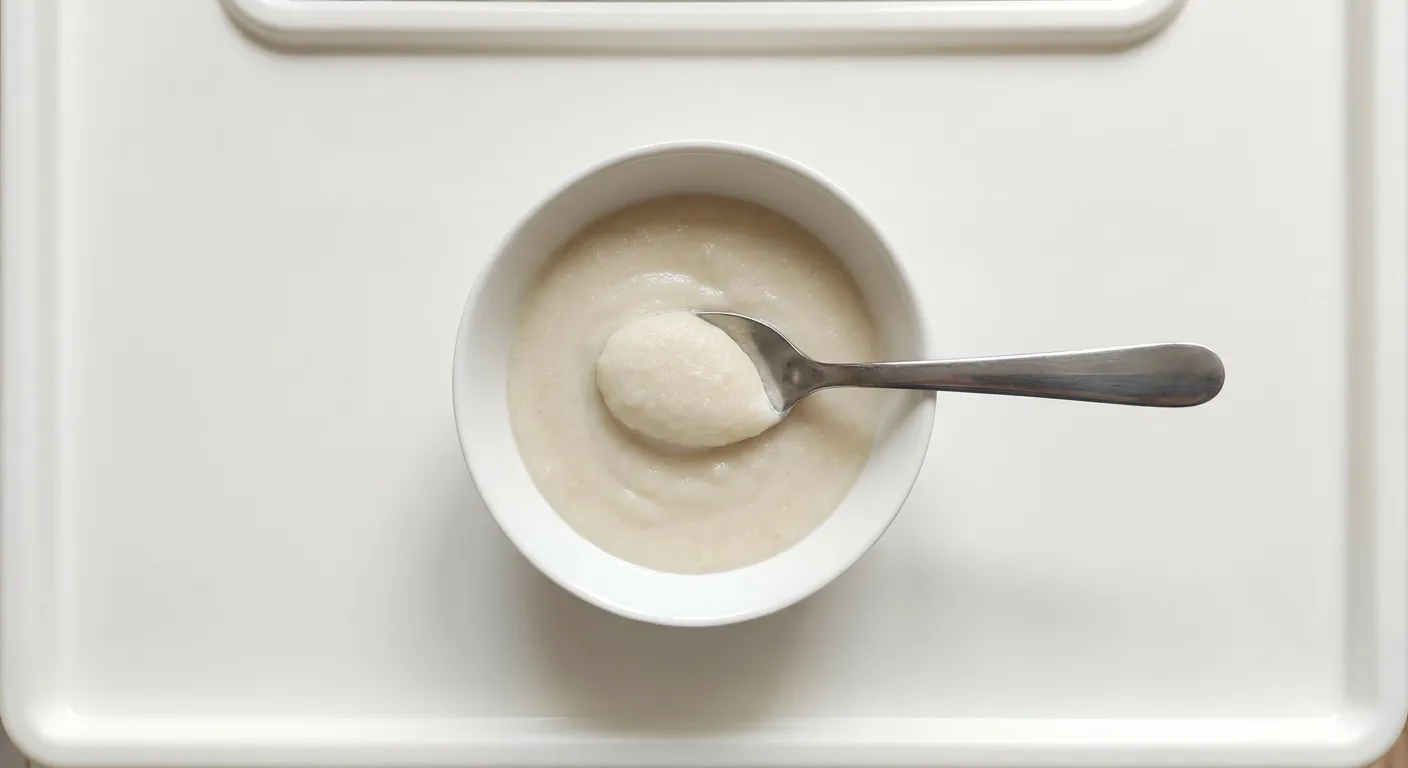
Oats at 6+ months: Smooth oat porridge
Smooth oat porridge

A smooth oat porridge is a good place to start, cooked soft and well mashed so it falls apart easily. Loosen it with a little breast milk, formula or water until it scoops up softly and still stays on a tilted spoon, thick rather than watery. Spoon it to her as food, not thinned into a bottle.

Once she is taking it, you can stir a little mashed banana through the warm oats for an easy oats banana porridge, or use any fruit mash she already enjoys. The fruit sweetens the bowl on its own, so keep it plain: no added salt before one, no sugar or jaggery before two, and no honey in her first year, since honey can bring on botulism, a serious illness. A little ghee adds gentle energy. Start with a couple of spoonfuls and let her appetite lead.
Oats at 9-12 months: Soft dosa strips
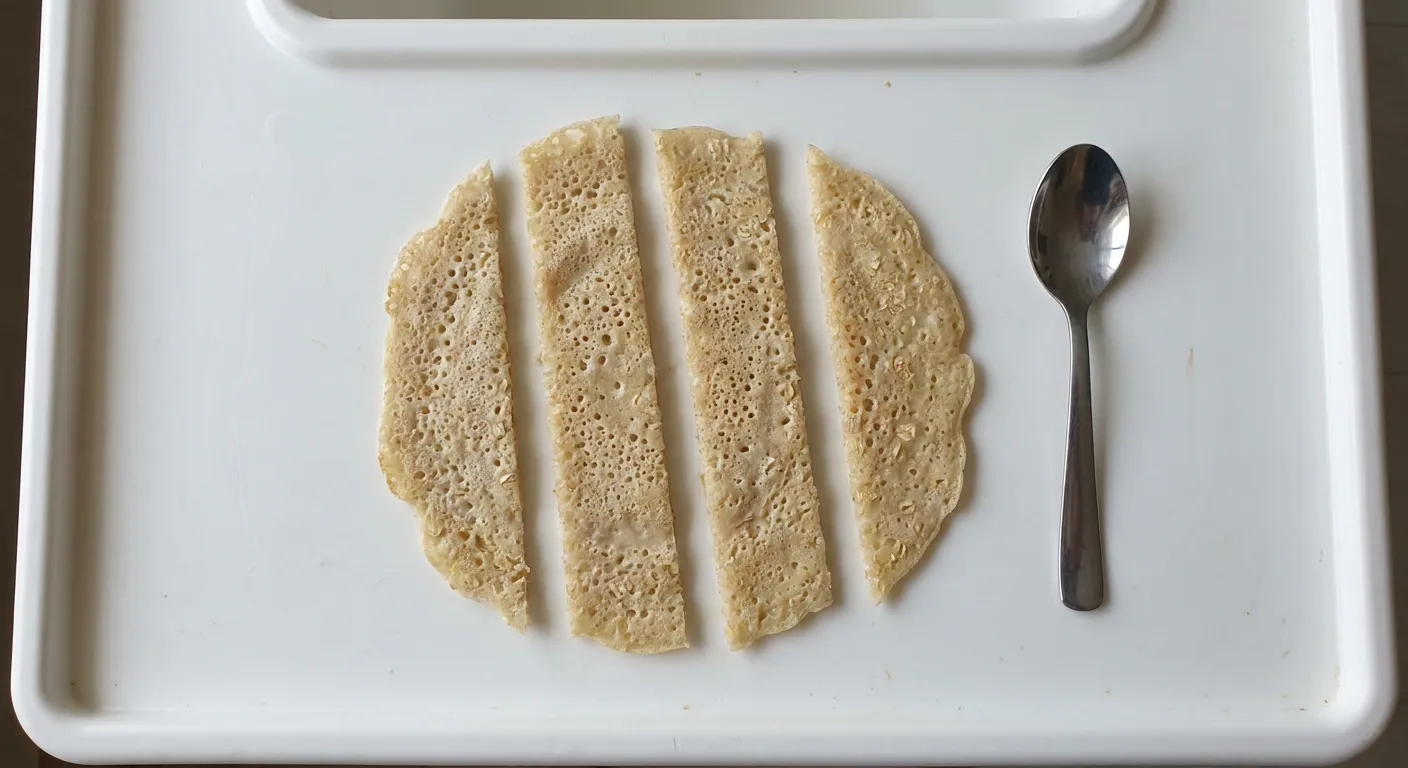
Soft dosa strips
Oats at 9-12 months: Soft oat balls
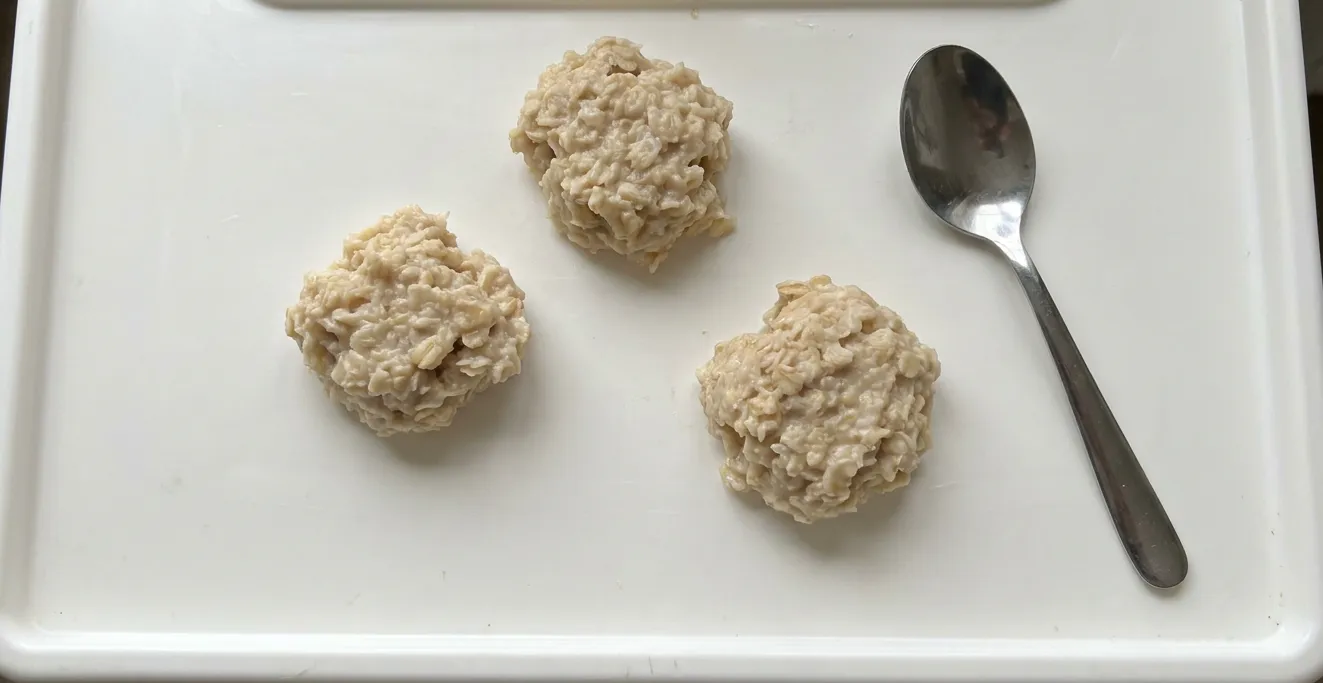
Soft oat balls

Now she can manage lumpier oats and pick things up herself. You can offer a thicker porridge she scoops by hand, soft oat balls rolled to hold together, or little pancakes and soft bakes made with oats or oat flour. Picking up these small pieces helps her pincer grasp develop.

Keep the oats soft and moist so they hold together, since dry, coarse flakes can scatter and make her cough. Offer a small amount and follow her cues, a little more as she wants it.

If your kitchen already makes a soft moong dal dosa, a version with oats stirred into the batter works just as well, cooked soft and thin into strips she can hold.

Spoon, fingers, or both? ›
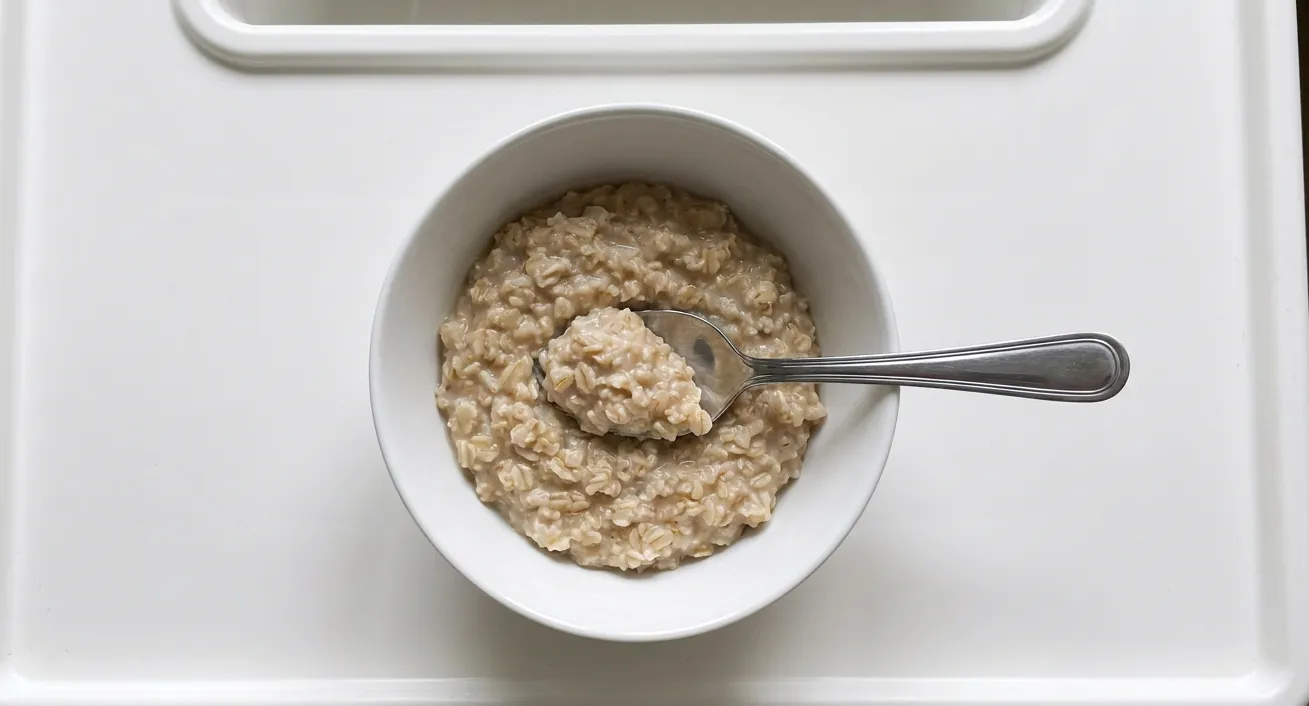
Oats at 12+ months: A soft family bowl
A soft family bowl
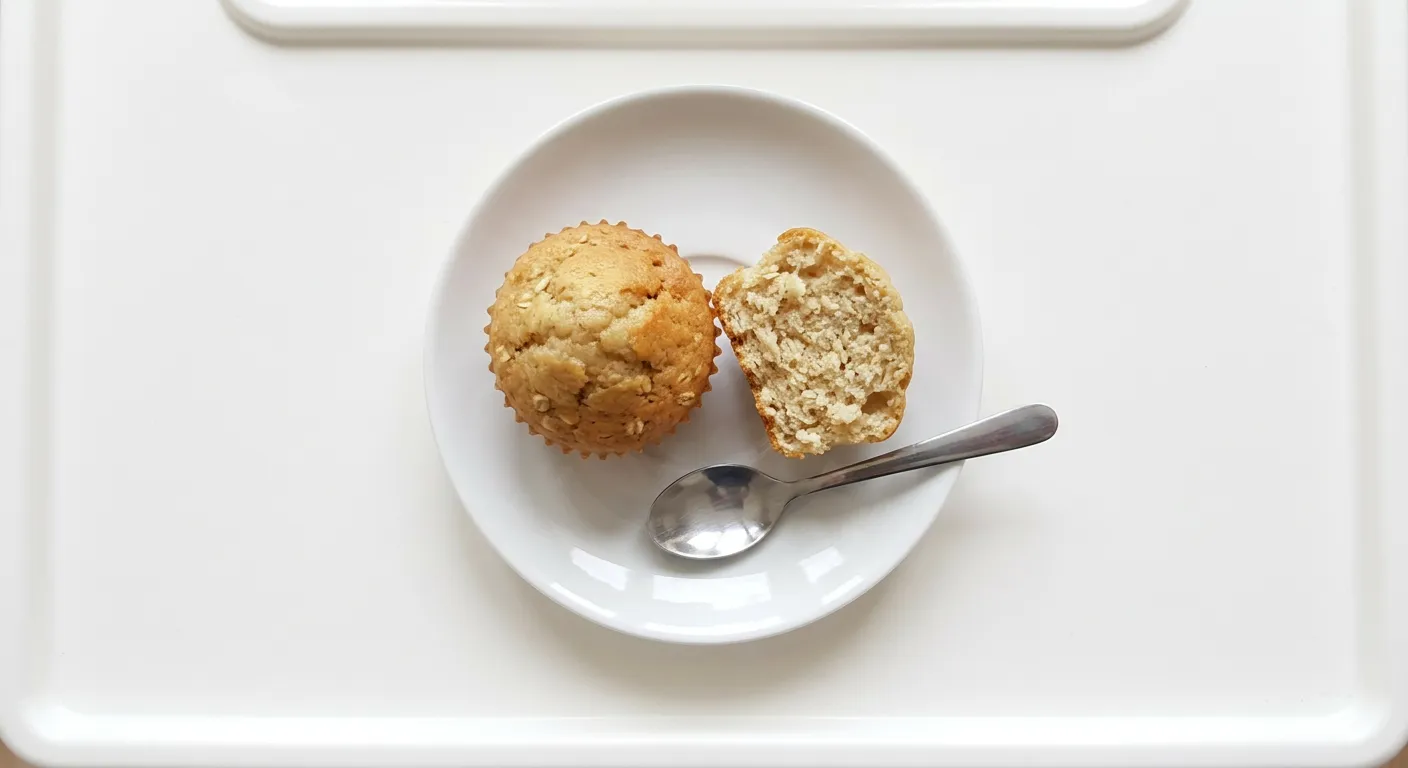
Oats at 12+ months: Oat muffins and bakes
Oat muffins and bakes

From a year, oats joins the family breakfast, a soft bowl she can scoop with a spoon, alongside oat breads, muffins and other soft bakes made with oats or oat flour.

Keep it soft enough to swallow easily and break up any dry, clustered bits. She decides how much now. The soft dosa she already knows fits into these breakfasts just as well.

Spoon, fingers, or both? ›

About oats

We can start oats from around six months, cooked soft into a thick porridge a little mouth can manage. Oats is a grain the WHO counts among those that give a baby protein, fibre and micronutrients for the morning bowl. It makes a gentle base that carries fruit or a little ghee.

The doubts we clear

CHOKINGWill she choke on oats?
Dry steel-cut oats, coarse unblended flakes or a stiff, over-thick porridge can clump and stick to the roof of her mouth, or scatter and make her cough. Cook the oats soft until they fall apart, grind coarse or steel-cut flakes finer for a younger baby, and keep firm granola and granola bars for after her first birthday.Choking vs gagging ›
MYTHOats is a wholesome whole grain and a fine breakfast option from six months. It is not a lesser, 'just processed' food that ranks below ragi, dalia or khichdi.
There is no ranking of first foods where one grain beats another. Keep the ragi, dalia and khichdi you already trust as her main meals, and let oats be one more gentle option for breakfast or a change. It does not have to replace anything.

Questions moms ask

I switched her to oats hoping it sits light, but she seems gassy now. Are oats too heavy?
Oats can feel heavy at first, and a few gassy or unsettled days while her tummy gets used to a new grain are common. Keep the servings small and give it a few days, it usually settles on its own. If it carries on, check with your paediatrician.
My seven-month-old gags on thicker oat porridge and I panic. Should I go back to blending it thin?
Gagging on a thicker porridge is something many babies do as they learn new textures, and it is usually not choking. You do not have to go back to thin. Loosen it a little with her milk or water and let her keep practising, staying close while she eats.Choking vs gagging ›
We started oats for breakfast, but everyone at home says oats cause weight loss. Am I wrong?
Oats will not make her lose weight. On its own it is a light grain, not really a weight-gain food, so the richness comes from what you add. A spoon of ghee, or some mashed banana, makes it more filling, with no added sugar or jaggery before she is two.Her weight and growth ›
Should I try baby-led weaning with oats?
Oats works well for baby-led weaning, with the spoon stage coming first. Start with a smooth porridge from a spoon at six months. Once her pincer grasp sharpens, around nine months, she can lift soft oat balls or little oat pancakes on her own. The IAP suggests the same nine-month step from mash to finger foods.Spoon, fingers, or both? ›
How much oats, and how often?
Oats works well as an everyday breakfast, though it should not crowd out the rest of her plate. Begin with a spoonful or two at six months and let her appetite lead, building to a small katori as she grows. The ICMR-NIN suggests aiming for around five food groups across her day, which keeps her meals varied.How much she should eat ›
Instant, rolled, or steel-cut, does it matter which oats I start with, and can I just grind regular oats?
Any plain oats works to start, whether rolled, quick, instant or steel-cut. You do not need special baby oats, the ordinary oats in your kitchen are fine. What matters more than the type is the label: pick a pack whose label says only oats, with no added sugar, salt or flavouring.
Can I cook the oats in cow's milk, or should I use only water or formula?
Cooking oats in cow's milk is fine from around six months, the same as using breast milk, formula or water to make the porridge. This is about mixing it into her food, not giving cow's milk as a drink, which is best kept until she is one. So a porridge cooked with a little whole milk is fine now, if that is what you would like to use.

Still have a question?

I read every message myself and reply.

WhatsApp me

Know a mom who needs this?

Send it on WhatsApp

Every page is checked against ICMR-NIN, IAP and WHO guidance.

Sources: IAP, ICMR-NIN and 3 more sources ›

Educational only, and never a replacement for your paediatrician. Read the full note ›