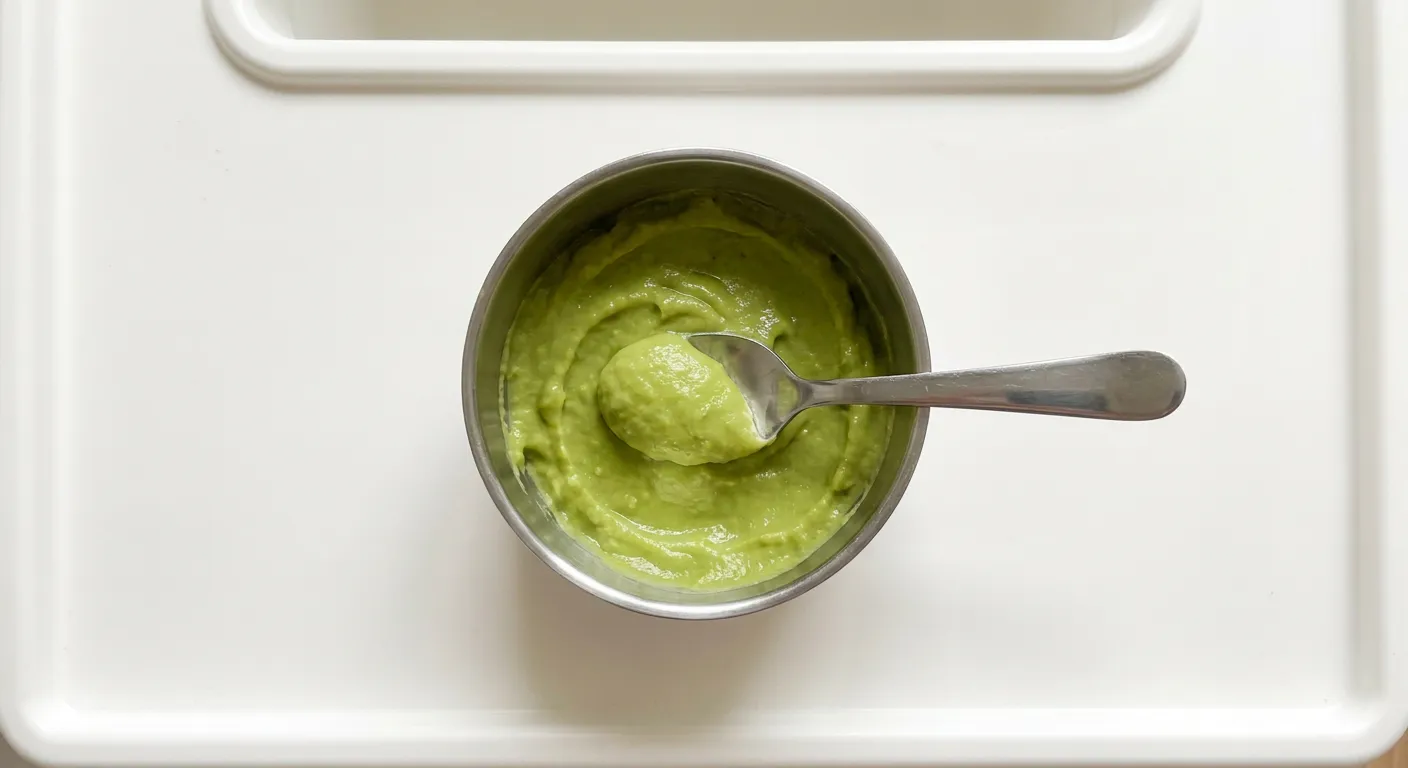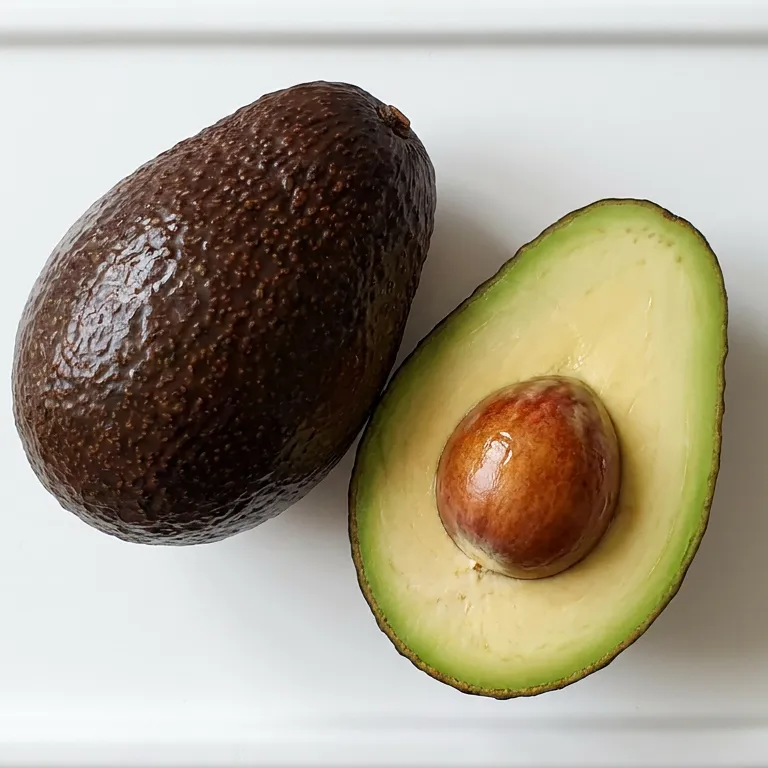
Avocado

Also called butter fruit, makhanphal, avakado

Safe from6 months
Choking riskLowRipe, soft, not round coins
AllergenNot common
Iron-richNo

How to serve, by her age

Avocado at 6+ months: Smooth ripe mash
Smooth ripe mash

We can start her on a ripe avocado, simply mashed smooth with a fork into a soft, scoopable paste. A well-ripened one needs no cooking at all, which makes it an easy first food. If it is thick, loosen it with a little formula or breast milk.

Once she is settled with it on its own, you can stir mashed avocado into a food she already eats, or mash it together with soft banana. Keep it plain, with no added salt while she is little and no added sugar before she is two, not even the pinch of salt or jaggery some add to make it tastier. Start with just a little and let her appetite lead.
Avocado at 9-12 months: Soft finger pieces
Soft finger pieces

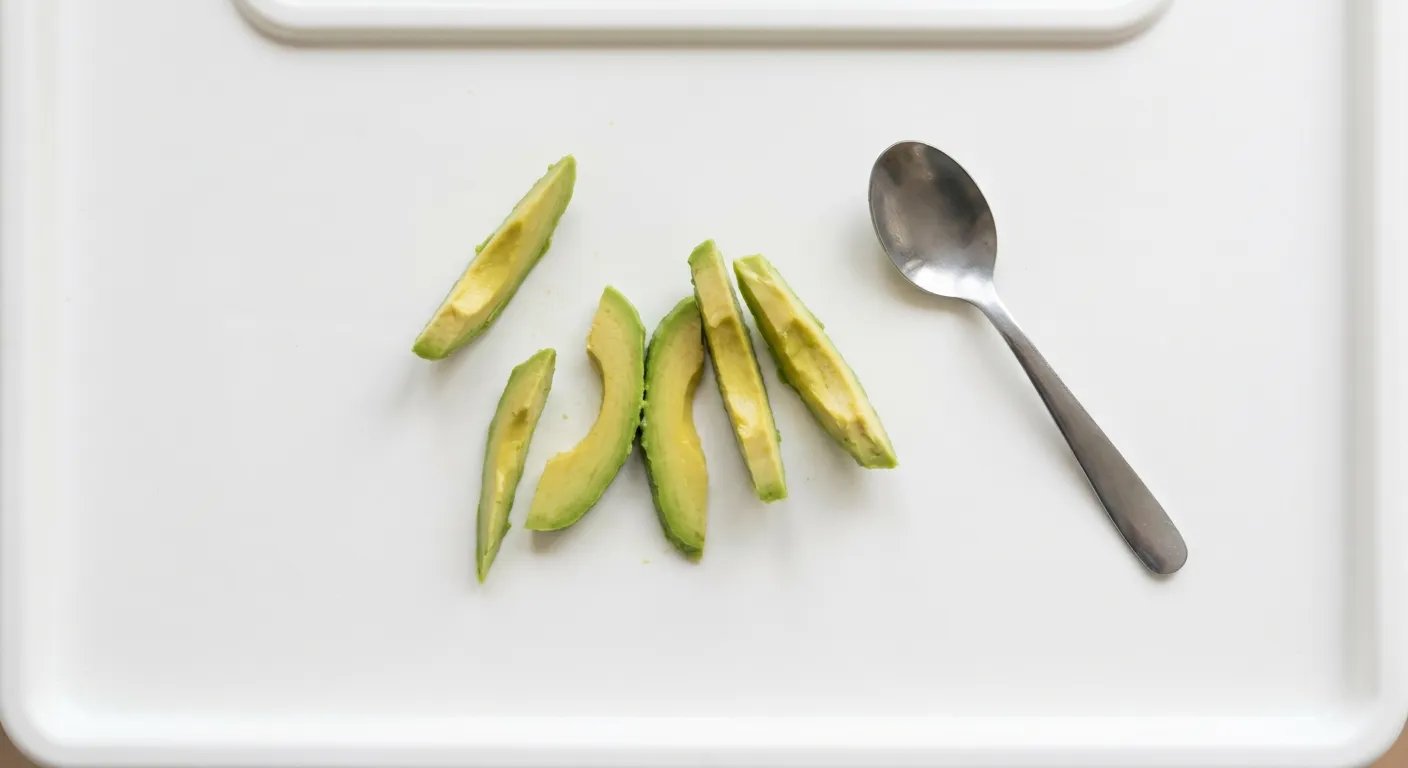
Now she can pick up soft pieces of avocado herself, cut into short finger-length strips or small bite-size pieces. If she struggles with the small pieces, thicker spears or a little mash are still perfectly fine. Picking them up is good practice while her pincer grasp develops.

Ripe avocado is soft and slippery, so offer strips no wider than your finger rather than round coins. If a strip keeps slipping out of her fingers, roll it in a little finely shredded coconut or hemp seeds for grip. She may gag a little as she learns to manage it, which is normal and not the same as choking. Offer a little and let her take what she likes.

Spoon, fingers, or both? ›
Avocado at 12+ months: Bite-size family pieces
Bite-size family pieces

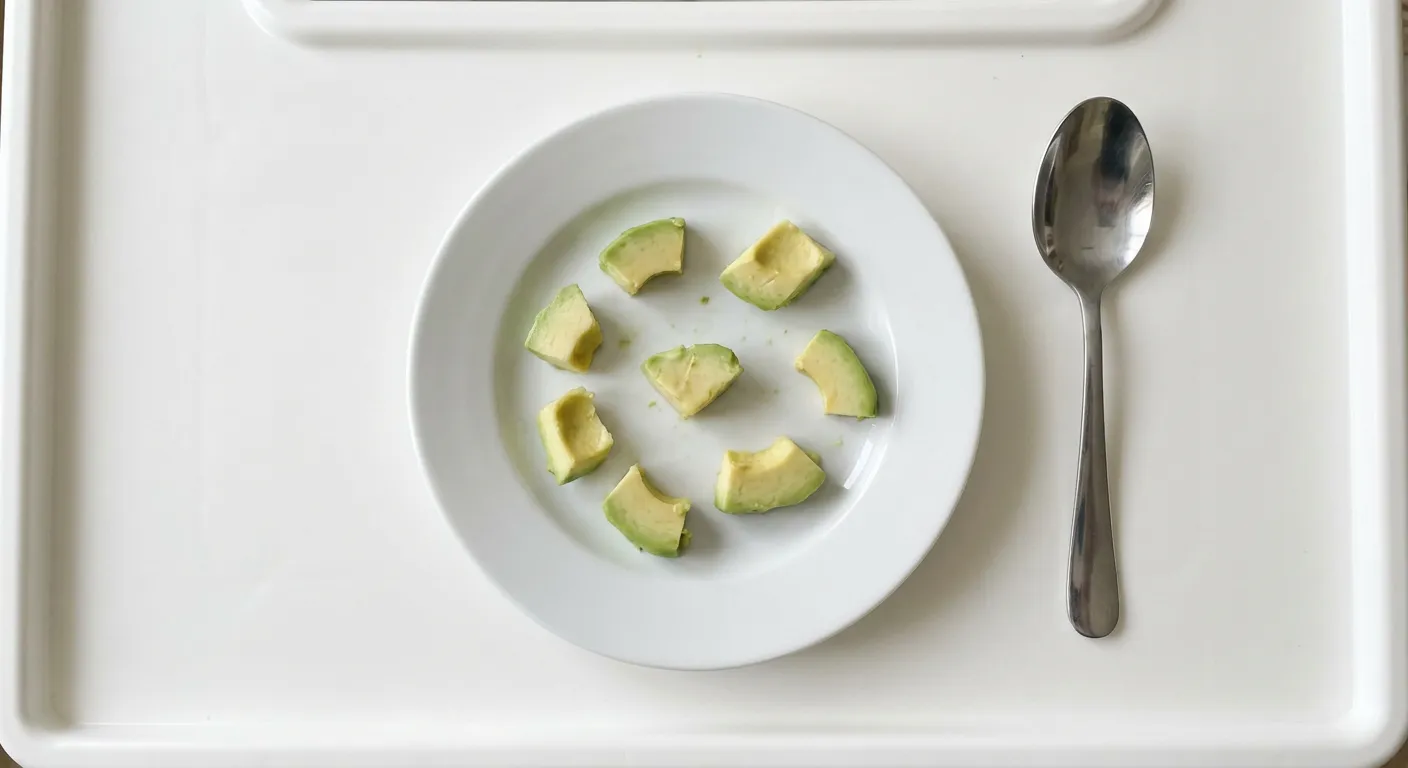
Once she is one, avocado is just part of what the family eats. Offer it in bite-size pieces or short spears, mashed onto toast, or stirred through her other foods, depending on how well she eats.

By now she decides how much she wants, along with everything else she is eating. Avocado browns quickly once cut, so it is best served fresh the same day rather than saved for later.

Spoon, fingers, or both? ›

About avocado

Ripe avocado is one of the gentlest foods to start at six months. It needs no cooking and mashes smooth for a new eater. It carries growth-supportive B-vitamins like folate and B6, and the WHO counts it among the high-fat fruits.

The doubts we clear

CHOKINGWill she choke on avocado?
An under-ripe, firm avocado, or ripe flesh left in round coins or big slippery chunks, can break off and slip back too fast and make her cough. Use a soft, ripe one, mashed smooth at six months, and from nine months cut it into short finger-length strips no wider than your finger rather than rounds or coins.Choking vs gagging ›

Questions moms ask

My toddler ate avocado happily, now she refuses it and all soft foods. I worry about her weight.
This is a common phase, not anything you did. Keep offering a little without pressure, when she is hungry and interested rather than full. Many babies take eight to ten tries before they accept a food again.When she refuses food ›
I gave my 8-month-old avocado and she keeps gagging on the slippery pieces. I panic every time.
That gag is frightening to watch, but on slippery avocado it happens a lot and is not the same as choking. Often it is her way of learning to move a soft piece around her mouth. Gagging is loud and she recovers on her own, choking is quiet. The soft pieces she can squash are fine.Choking vs gagging ›
My baby is small and everyone says avocado will help her gain weight. Is that true?
Avocado gives her easy energy, and the ICMR-NIN groups it among the high-calorie fruits, so it helps most as part of a varied plate, not on its own. What matters is that she stays active and grows along her own steady line.Her weight and growth ›
I keep hearing avocado is a 'cold' food that can bring on a cough or cold. Is it safe when the weather is cool or my baby is a bit sniffly?
This is one of the most common worries passed down at home, and it is easy to hear it every time she sniffles. A cough or cold comes from a virus, not from a soft fruit, so avocado is safe to give right through the year, sniffle or no sniffle. If it puts everyone at ease, you can serve it at room temperature rather than cold from the fridge.Colds, coughs and feeding ›
Everyone at home says avocado is too rich and heavy for a baby's tummy. Could it cause indigestion or constipation?
This is a common worry about rich, fatty foods, but the good fats in avocado are the helpful kind. Like any new fatty food, the gentle way in is to start with a small amount and watch how her tummy takes it over the first few days. If her stomach feels off, ease back and give it a little more time.
Should I try baby-led weaning with avocado?
With avocado it is an easy step. Start her at six months on smooth mash from a spoon. As her pincer grasp strengthens, she can move to soft finger pieces. The IAP puts this shift from mash to finger pieces at around nine months.Spoon, fingers, or both? ›
How much avocado, and how often?
Avocado can be an everyday food for her, counting as one of her daily fruits. Let her appetite lead on how much, rather than a set amount. Keep it as one fruit among many, not the whole meal, so there is still room for her iron and protein foods.How much she should eat ›
Could avocado trigger an allergic reaction, especially if my baby already reacts to banana, kiwi or latex?
Avocado is not a common allergen, so for most babies it needs no special routine. A little more care makes sense if she already reacts to banana, kiwi or latex, as these can go together, or if she has had a delayed tummy upset called FPIES with another food. Introduce it on its own, watch over the next few days, and see your paediatrician if she reacts. For nearly every baby it is a smooth, gentle food with nothing extra to watch for.Starting egg, nuts and other allergens ›

Still have a question?

I read every message myself and reply.

WhatsApp me

Know a mom who needs this?

Send it on WhatsApp

Every page is checked against ICMR-NIN, IAP and WHO guidance.

Sources: IAP, ICMR-NIN and 3 more sources ›

Educational only, and never a replacement for your paediatrician. Read the full note ›